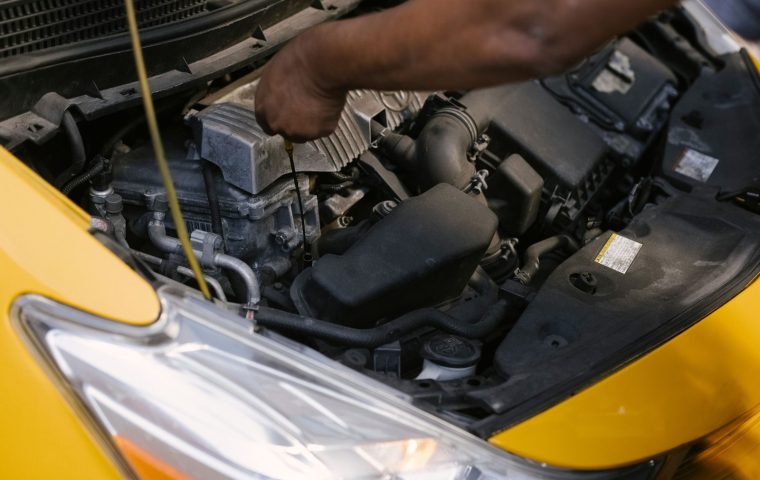

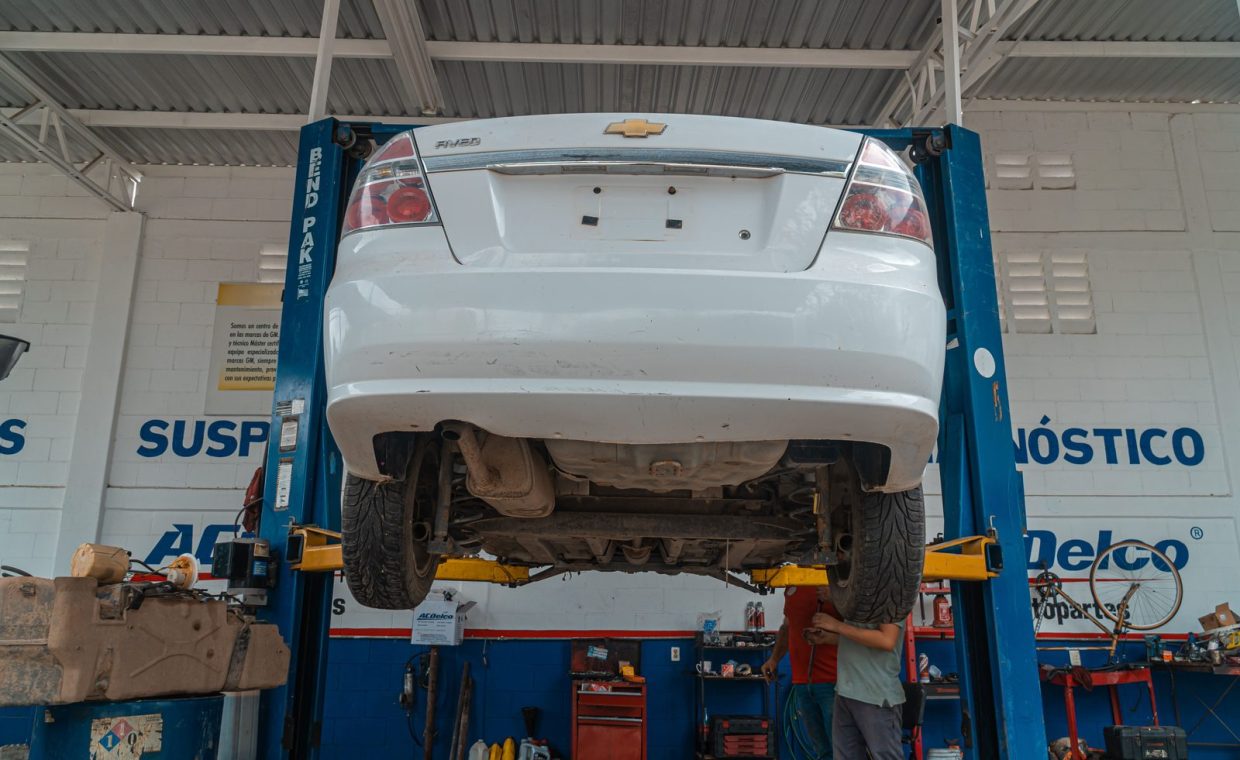
A reader named Nadia emailed me a photo of a $2,800 repair estimate on a car worth maybe $4,000. Her sedan needed serious work, the shop had written it all up, and she was staring at a number that came to roughly 70 percent of what the car would fetch from a private buyer.
Her question was simple. Should she pay it, or should she take that money and put it toward something newer? It is the most common question I get, and the honest answer is that there is no single number that makes the decision for you.
What you can build is a framework. A way of weighing the cost of the fix against the value and condition of the car, so the choice stops feeling like a gamble and starts feeling like math you can actually do at the kitchen table.
Start With the Repair-to-Value Ratio
The first thing to figure out is what the car is worth today, repaired and running. Not what you paid for it, and not what you owe on it. What a private buyer would hand you for it in its fixed condition.
Then compare the repair cost to that number. If a fix costs more than half of what the car is worth, you are in territory where replacement deserves serious thought. If it costs more than the car itself, the math has basically already answered you.
Take Nadia's sedan. If a clean version of that car sells for around $4,000, a $2,800 repair is sitting at roughly 70 percent of the car's value. That is a loud signal, not a quiet one.
Repair cost divided by the car's repaired value. Under 30 percent, usually fix it. Over 50 percent, start shopping. Between the two, the rest of this article is for you.
The myth that trips people up
Plenty of owners believe that because they already sank money into the car, they should keep sinking more to protect that investment. That money is gone whether you fix the car or not. The only question that matters is what the next dollar buys you, not what the last dollar already bought.
Weigh the Cost Against Months of Reliable Driving
A repair-to-value ratio is a snapshot. The better way to think about a big bill is to translate it into time. How many months of driving does this purchase buy before the next major thing breaks?
A $1,200 repair on a car that will then run trouble-free for two years is cheap. That is $50 a month for reliable transportation, which beats almost any car payment you will find. The same $1,200 on a car that has thrown three unrelated failures this year is a different animal entirely.
This is where knowing realistic numbers helps. Before you accept any estimate, it is worth checking it against what common repairs actually tend to cost so you can tell a fair quote from an inflated one.
Divide the repair cost by the months of service you honestly expect to get from it. If that monthly figure is lower than a payment on a replacement, the repair is usually the smarter spend.
Read the Pattern, Not the Single Failure
One failed alternator on an otherwise solid car tells you almost nothing bad. A water pump, then a wheel bearing, then a fuel pump, all within eight months, tells you a great deal.
Cars wear out as systems, not as single parts. When the failures start clustering and they are unrelated to each other, you are usually watching a vehicle reach the end of its useful service life. The current repair is not really the problem. It is the preview.
I keep a simple log for my own cars, a note on my phone with the date and the repair. When I glance back and see four entries in a year, I know the next decision is coming whether I like it or not.
A concrete example
A friend kept fixing her crossover one part at a time, $400 here, $600 there, never a single bill big enough to force a decision. Over eighteen months she spent more than $4,000 in small pieces on a car worth maybe $6,000. The death by a thousand cuts is real, and it hides from you because no single invoice ever looks like the breaking point.
Separate the Deal-Breakers From the Annoyances
Not all repairs carry the same weight in this decision. Some are nuisances. Some are the kind of thing that quietly ends a car's life.
Structural rust, a cracked engine block, a failed transmission, or a head gasket on a high-mileage motor are the heavy hitters. These are expensive, and they often travel with friends. Brakes, suspension components, sensors, and most electrical gremlins are usually worth fixing on a car that is otherwise sound.
| Repair type | Typical lean | Why |
|---|---|---|
| Brakes, suspension, tires | Fix it | Wear items, predictable cost, safety critical |
| Sensors, electronics, AC | Usually fix | Annoying but rarely fatal to the car |
| Transmission, major engine work | Run the ratio | High cost, often signals deeper wear |
| Frame rust, cracked block | Lean replace | Safety and reliability both compromised |
One detail people overlook is how their own habits feed into this. Skipping basic upkeep like learning to rotate your tires so they actually last turns cheap maintenance into expensive replacement, and that pattern repeats across every system on the car.
Factor In the Hidden Costs of Replacing
Walking away from a car is rarely as clean as the repair quote makes it look. A replacement brings its own bills, and people forget to put them on the scale.
Sales tax, registration, title fees, and the near-certain need for tires or brakes on a used car you just bought add up fast. So does the simple fact that you do not know the history of the new car the way you know the history of the one in your driveway.
A $4,000 replacement can easily carry $1,500 in taxes, fees, and immediate maintenance before you have driven it a mile. The repair you were avoiding may have been cheaper than you thought.
There is also a quieter trap on the other side. If you are tempted to replace with something you plan to modify heavily, understand that you may be trading one money pit for another, because the reliability cost of modifying a car often shows up as exactly the kind of repeat repairs you are trying to escape.
Make the Call With a Clear Head
When the numbers are close, and they often are, the deciding factors are usually personal rather than mechanical. How much do you trust the car? How would a sudden breakdown disrupt your life and work?
A car that strands you on a commute you cannot miss carries a hidden cost that no estimate captures. A reliable car you know inside and out carries a hidden value that no spreadsheet shows. Both belong in the decision.
My own line is this. I fix a car I still trust, and I replace a car I have started to brace myself against every time I turn the key. That feeling is data too, and it is usually telling you something the invoices already confirmed.
Find the car's real value. Compare the repair to it. Translate the cost into months of driving. Read the failure pattern, not the single part. Add the true cost of replacing. Then trust your read on the car.
Is there a mileage number where I should just stop fixing a car?
No single number works for every car. A well-kept vehicle can run reliably past 200,000 miles, while a neglected one can become a money pit by 120,000. Judge the car's condition and repair history, not the odometer alone.
Should I get a second opinion before paying for a big repair?
Almost always, yes. A second shop may diagnose the problem differently or quote a meaningfully lower price. On any repair over roughly $1,000, a second estimate usually pays for itself and sometimes reveals the first diagnosis was wrong.
Does it make sense to repair a car I still owe money on?
Often it does, because replacing it means paying off the loan and starting a new one on top. Run the repair cost against what you owe and what the car is worth, and weigh whether a fix buys you enough trouble-free months to keep the existing loan worthwhile.
Nadia, for what it is worth, sold her sedan and put the cash toward a higher-mileage but better-documented replacement. Your answer might land the other way, and that is fine. The point is not to reach my conclusion. It is to run your own car through the same honest math so the decision belongs to you and not to whoever happens to be writing the estimate.