
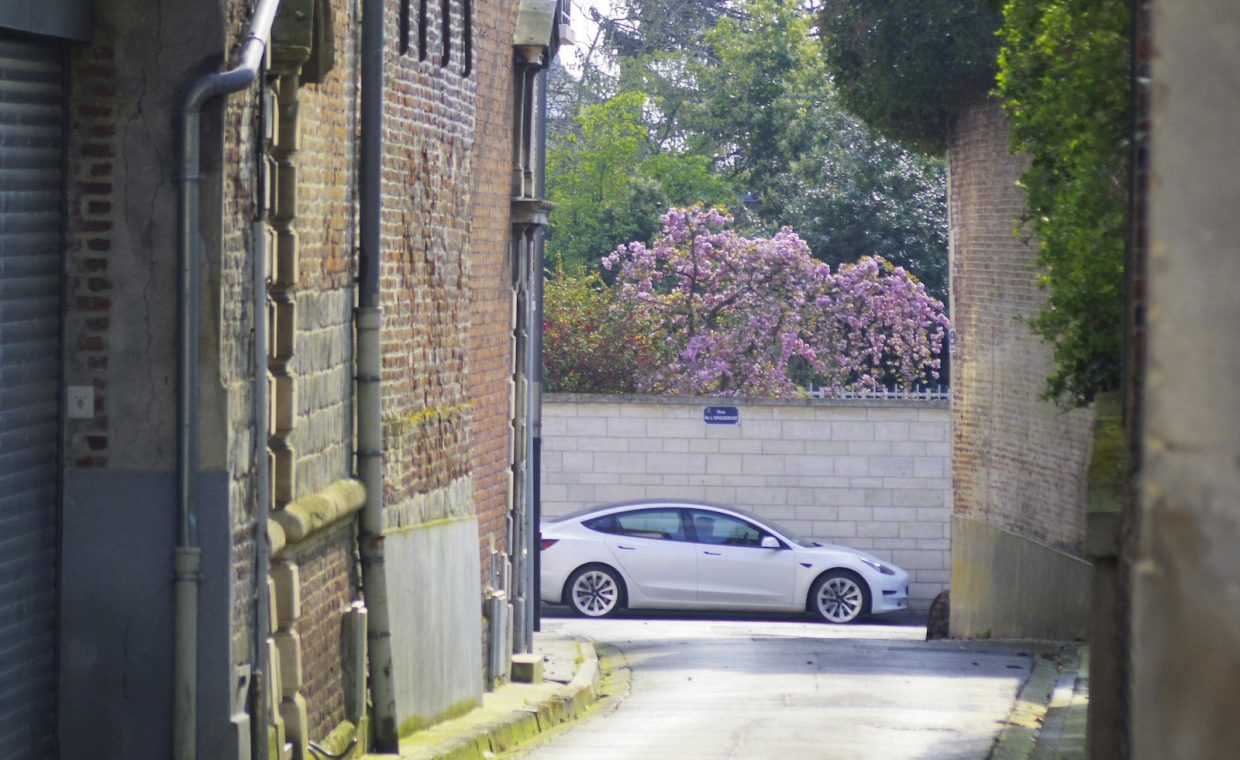
The borrowed Model 3 showed up on a Monday with 71 percent battery and a phone-key setup that took me three tries to pair in the rain. My neighbor, Darius, leaned over the fence and asked the question everybody asks: "So is it actually cheaper, or does that just sound good on paper?" I told him I would have a real answer in a week.
That is the whole point of this piece. Not a spec sheet, not a track day, just seven ordinary days of one person (me) doing the things you would do: school runs, a grocery haul, a 220 mile trip to see my sister, and one very awkward charging stop at 11 pm.
I kept a running note on my phone with every mile, every kWh, and every small annoyance. Here is what the week actually looked like, dollars included.
The First 48 Hours: Learning the Car Has Opinions
The Model 3 I drove was a rear-wheel-drive version with roughly 270 miles of rated range. On day one I drove like I was being graded, and the regenerative braking made me carsick by lunch.
That sounds dramatic, but it is the most common first-week complaint I hear from new EV drivers. The car slows hard the moment you lift off the accelerator, and your brain expects coasting. By day two my right foot had recalibrated and I barely touched the brake pedal again all week.
The interior is famously minimal. Everything lives on the center screen, including the speedometer, which I disliked more than I expected to. Glancing right to check my speed felt unnatural compared to the heads-down dash in something like the truck I tested on its first drive, where the gauges sit exactly where decades of muscle memory expect them.
The phone-as-key works beautifully right up until your phone battery dies or the Bluetooth hiccups. I carried the backup key card in my wallet all week and used it twice. Do not skip that card.
The Daily Commute Math
My normal week is unglamorous. Two kids at two schools, an office I go into three days, and a gym I lie about going to. That added up to about 38 miles a day of stop-and-go suburban driving.
This is where the Model 3 quietly shines. City driving is where EVs sip energy instead of gulping it, because all that braking feeds charge back into the battery. Over five commuting days I averaged the equivalent of roughly 3.9 miles per kWh.
I charged at home on a standard 240 volt outlet I already had in the garage. Here is the honest cost breakdown for my commuting days.
| Day | Miles driven | kWh used | Home charge cost |
|---|---|---|---|
| Monday | 41 | 10.8 | $1.62 |
| Tuesday | 36 | 9.4 | $1.41 |
| Wednesday | 44 | 11.6 | $1.74 |
| Thursday | 33 | 8.7 | $1.31 |
| Friday | 39 | 10.2 | $1.53 |
That is under two dollars a day to commute, at roughly 15 cents per kWh. My old gas commuter would have burned closer to nine dollars over the same miles. The savings are real, but notice they only happen because I can charge at home overnight.
If you rent, park on the street, or live in an apartment without a plug, that pleasant two-dollar number turns into public-charger pricing that can rival gas. Home charging is the entire savings story. Read your living situation before you read the window sticker.
The Road Trip: Where Theory Meets a Cold Parking Lot
Saturday I drove 220 miles to my sister's place. This is the part of EV ownership that separates the brochure from the reality.
I left with 90 percent battery, which the car estimated would get me about 240 miles. It was optimistic. Highway speeds drain an EV faster than city driving, the exact opposite of a gas car, and I rolled into a Supercharger 30 miles short of her house with 12 percent left and a slightly elevated heart rate.
The Supercharger stop itself was painless. I plugged in, walked to a coffee shop, and came back 22 minutes later to 80 percent. That charge cost about $18 because this particular site charged a premium rate during peak hours.
What the road trip actually taught me
The charging is not the problem. The planning is. You stop more often, you stop for longer, and you build the trip around chargers instead of around where you actually want to stop.
For a couple, that 25 minute break is a coffee and a stretch. For a family of five mid-meltdown, it can feel like an eternity, which is honestly part of why I still recommend families cross-shop against the gas options in our roundup of the best three-row SUVs for families before going all-in on an EV for road trips.
Use the car's built-in trip planner and then sanity-check it against a separate charging app. The car assumes ideal conditions. Cold weather, headwinds, and a roof box full of luggage all quietly eat your range.
The In-Car Tech: Genuinely Good, Occasionally Strange
The software is the best and weirdest thing about living with this car. Navigation, music, and climate all respond instantly, and the screen never lagged once in seven days.
The standard driver assistance held lanes and adjusted speed on the highway better than systems I have used in cars costing far more. I still kept my hands on the wheel, because trusting any of these systems blindly is how people end up in fender benders and forum threads.
Then there are the quirks. The car wanted a software update mid-week and locked me out of a few features for 40 minutes while it installed, which is fine in a driveway and would be maddening in a parking garage. The wipers have a mind of their own. And the lack of physical buttons means adjusting your mirrors is a tiny scavenger hunt through menus.
The Money Talk Nobody Reads Carefully
Here is where my skeptical streak earns its keep. The energy savings are easy to fall in love with, but they are not the whole financial picture.
Insurance quotes on EVs often run higher because the repair bills run higher. Replacing a damaged battery pack or a smashed camera array is not cheap, and body shops that work on these cars are fewer and farther between. Tires also wear faster, because the car is heavy and the instant torque is fun.
And if you finance one, read every line. EV pricing moves around constantly with incentives and rate promotions, which is exactly the environment where dealers bury costs in the paperwork. I walk through the usual traps in our guide to car financing traps worth avoiding, and most of them apply double to a fast-depreciating EV.
Five commuting days of home charging came to about $7.61. The road trip added one Supercharger stop near $18 plus a top-up at my sister's place. Call it under $30 in energy for around 480 total miles. The gas equivalent would have run me close to $70.
So Would I Buy One?
By Friday I had stopped thinking about the car and just started using it, which is the highest compliment I give any vehicle. The quiet, the instant pickup pulling out of a side street, the never visiting a gas station, all of it became normal fast.
But "normal" depended entirely on my garage outlet. Strip that away and my honest enthusiasm drops by half. This is not a car that fits every life equally, and anyone telling you otherwise is selling something.
Home charging makes it cheap; public-only charging makes it ordinary. City driving is its superpower and highway road trips are its weak spot. The tech is excellent with odd edges. Budget for higher insurance, faster tire wear, and read every line of any financing offer before you sign.
Can you really live with a Model 3 without a home charger?
You can, but the math changes a lot. Without overnight home charging you lean on public chargers, which often cost two to three times more per mile and turn the headline savings into something much closer to running a gas car. If you cannot charge where you sleep, think hard before buying.
How long does charging actually take on a road trip?
On a Supercharger, going from low to about 80 percent took me roughly 22 minutes in mild weather. That is enough time for coffee and a stretch. The catch is you need to plan stops around charger locations, and cold weather can stretch those times noticeably.
Is the regenerative braking hard to get used to?
It took me about a day and a half. The car slows firmly the second you lift off the accelerator, which feels strange at first and made me slightly queasy on day one. By the second day my foot had adjusted and I rarely touched the brake pedal again.
If you take one thing from my week, let it be this: a Model 3 can absolutely save you money and genuinely change how you feel about driving, but only if your living situation lets it. Walk the lot, check your outlet, run your own numbers, and ignore anyone who promises it works for everybody. Darius, for the record, is still on the fence, and honestly that is the right place to be until you have done the math yourself.