
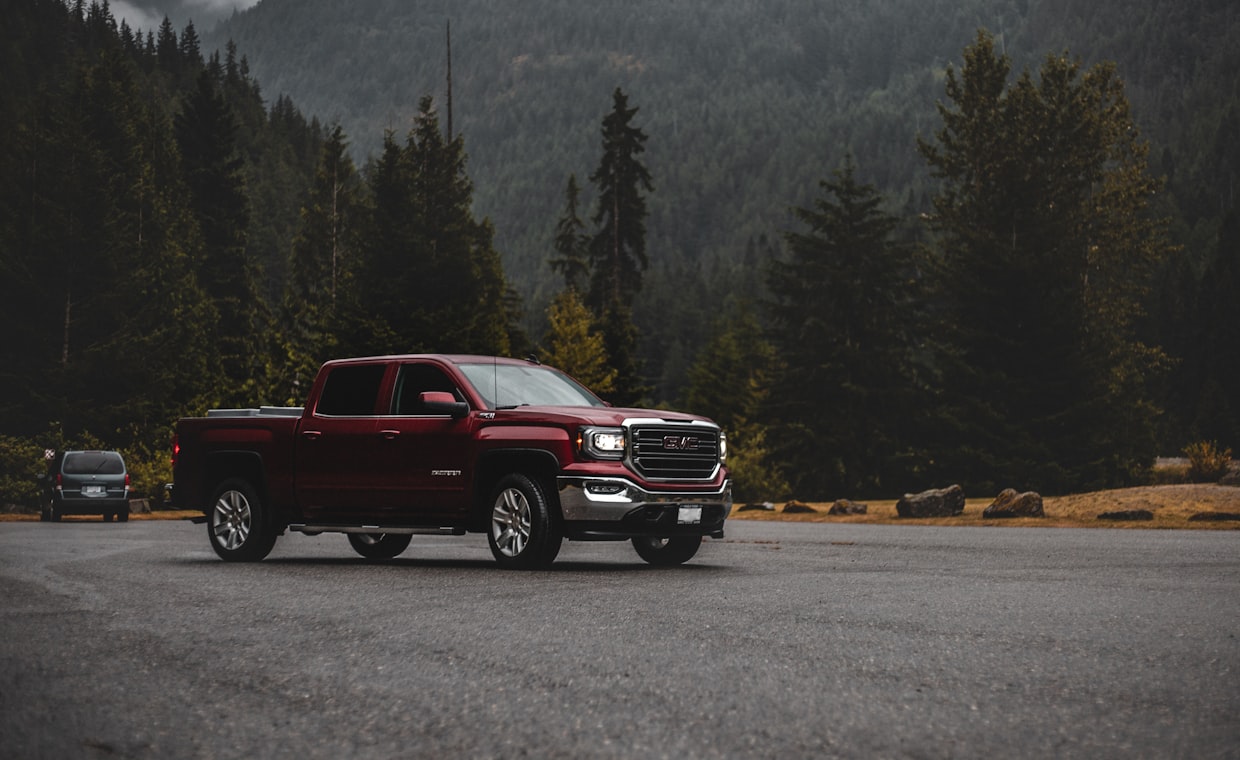
Two trucks sit in the same gravel lot every morning near my shop. One is a Silverado 1500 pulling a landscaping trailer, the other an F-150 hauling scaffold and a full crew. Same job, same hills, two very different owners who each swear their truck is the only sensible choice.
I have had both up on the lift more times than I can count. I have chased the rattles and heard the honest complaints once the new-truck shine wears off. So instead of brochure talk, here is how these two half-tons actually behave once they are yours.
The short version: these are the two best-selling trucks in America for a reason, and neither one is a mistake. The difference is in the details, and those details decide whether you love your truck at year five.
What a half-ton really has to do
Half-ton is old-school shorthand for a light-duty pickup, roughly the 1500 or 150 class. It is the truck that has to be a work rig on Tuesday and a family hauler on Saturday.
That dual life is the whole game. A truck can tow like a champ and still be miserable to park, or ride like a couch and fold under a real load. Both the Silverado and the F-150 split that difference, and they lean slightly different ways.
If your week is honestly more errands and highway than jobsite, a quiet daily driver might serve you better. I have pointed plenty of folks toward our roundup of the best cars for long commutes before they signed for a truck they did not need.
Engines and how they actually drive
Ford leans hard on turbocharged V6 power. The EcoBoost lineup, especially the 3.5-liter, makes strong low-end grunt and gets the truck moving without drama. There is also a hybrid PowerBoost option that turns the F-150 into a rolling generator, which contractors quietly love.
Chevy plays it a little more traditional. The 5.3-liter and 6.2-liter V8s are smooth, predictable, and sound like a truck is supposed to sound. There is a turbo four and a diesel in the mix too, and that diesel is a genuinely nice highway cruiser.
From the wrench side, both drivetrains are mature. The Ford turbos ask a bit more on maintenance, cooling and intake care mostly, while the Chevy V8s are about as familiar as an engine gets. If you want my seat-of-the-pants read on the Ford, I covered that in the Ford F-150 first drive tested.
Towing and payload, without the guesswork
Both trucks can tow more than most owners ever will. The headline numbers depend heavily on cab, bed, axle, and package, so treat any single figure as a ballpark, not a promise.
Here is a general, real-world comparison of how the two lines stack up in the popular configurations people actually buy.
| Category | Chevy Silverado 1500 | Ford F-150 |
|---|---|---|
| Max tow (properly equipped) | Roughly 13,300 lbs | Roughly 13,500 lbs |
| Max payload | Around 2,200 lbs | Around 2,400 lbs |
| Best engine for towing | 6.2L V8 | 3.5L EcoBoost V6 |
| Fuel-saver option | Duramax diesel | PowerBoost hybrid |
| Bed material | Steel | Aluminum alloy |
The practical takeaway is that towing capacity alone should not decide it. What matters more is how the truck feels with weight behind it, and both are stable and confident when the trailer is loaded right.
Living with it every day
This is where a lot of buyers actually decide. The F-150 cabin has a clean, businesslike layout, a huge available screen, and that clever fold-flat shifter and work-surface console. It feels like a tool designed by people who use tools.
The Silverado interior took criticism for years for feeling plain, and Chevy has since dressed it up with better materials and a larger display. Higher trims now feel genuinely nice inside, though I give Ford a slight edge on storage.
Ride quality is close. The F-150 soaks up rough pavement a touch better, while the Silverado steers with a light, easy feel that makes it painless to park. If hauling the whole family in quiet is your real goal, a truck may be the wrong tool, and I steer those buyers toward the best 3-row SUVs for families instead.
Reliability and what tends to break
Both trucks are dependable when they are cared for, and both have their known gremlins. That is normal for high-volume vehicles, and it is nothing to panic over.
On the Ford side, I see the occasional electronics quirk and turbo-related maintenance if cooling is ignored. On the Chevy side, the older lifter and AFM/DFM concerns get the most attention, along with the usual sensor and infotainment nags.
None of that makes either a bad truck. It makes them machines. Stay on top of oil intervals and small warning signs, and both will run well past 150,000 miles without drama.
Neither truck is clearly more reliable than the other across the board. The best predictor of a long, cheap life is the previous owner's maintenance habits, not the badge on the tailgate. Buy the truck with the paper trail.
What it costs to own, not just to buy
Sticker price is only the opening bill. Insurance, fuel, tires, brakes, and depreciation add up fast on a full-size truck, and those numbers move the needle more than a few thousand dollars at signing.
Here is a general sense of the ownership picture. Treat these as illustrative ranges, since trim, region, and driving style swing them hard.
| Cost factor | Silverado 1500 | F-150 |
|---|---|---|
| Typical real-world fuel economy | High teens to low 20s mpg | High teens to low 20s mpg (hybrid higher) |
| Resale strength | Strong | Strong, often slightly higher |
| Common repair parts | Widely available, affordable | Widely available, affordable |
| Diesel or hybrid premium | Diesel adds upfront cost | Hybrid adds upfront cost |
The F-150 tends to hold resale a hair better, which softens the depreciation hit. The Silverado can be the better value on the lot if incentives are strong, so shop the out-the-door numbers on both.
So which half-ton wins
If I had to hand you keys today, here is how I would split it. Choose the F-150 if you want the broadest engine menu, the smartest cabin, and slightly better resale, especially the hybrid if jobsite power matters.
Choose the Silverado if you love a natural V8, want that light steering, or you find a stronger deal on the trim you want. The diesel in particular is a quiet, torquey highway partner that gets overlooked.
There is no wrong answer here, only the right answer for your driving. Pick the one whose engine and cabin you genuinely prefer, then negotiate hard.
Is the Silverado or F-150 better for towing a travel trailer?
They are close enough that either handles most travel trailers comfortably when properly equipped. Match the truck's rating to your loaded trailer weight with a safe margin, and the F-150 EcoBoost or Silverado 6.2L V8 both tow with confidence.
Which truck is cheaper to maintain over time?
Maintenance costs are similar, with parts widely available for both. The Chevy V8s are simpler for a home mechanic, while the Ford turbos reward careful cooling and intake service. The bigger cost driver is how well the previous owner kept up on fluids.
Should I buy the hybrid or diesel version?
Only if the fuel savings or extra features earn back the upfront premium for your mileage. The F-150 PowerBoost hybrid shines for onboard power and stop-and-go driving, while the Silverado diesel is best for high-mileage highway drivers who want torque and range.
Take both for a real test drive, not a lap around the block, and load one up if the dealer will let you. Trucks reveal themselves under weight and on rough roads, not on a smooth showroom loop. Buy the one that feels right in your hands and fits your wallet, and you will be happy either way. That is the honest call from someone who fixes both for a living.