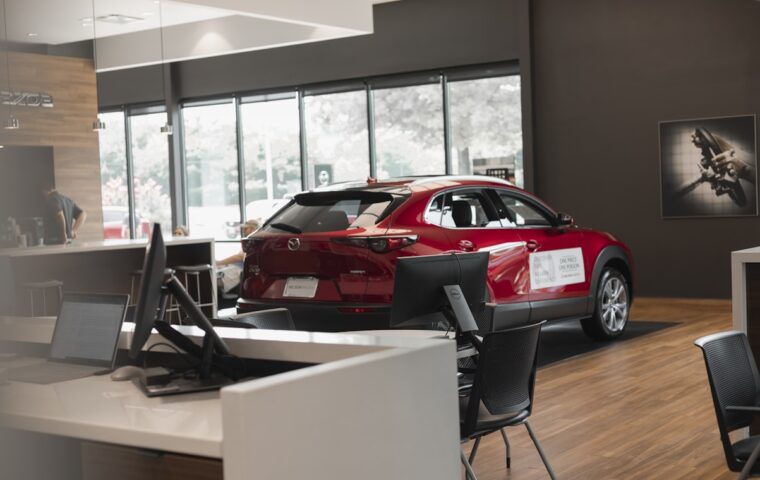


Wendell slid a padded deal sheet across the coffee shop table and tapped one line with his finger. It wasn't the price of the car that bothered him. It was a line item labeled "market adjustment" for $2,995, sitting just above a "protection package" he never asked for. He was a 34-year-old nurse who works night shifts, and he wanted a reliable crossover that would not strand him on a 5 a.m. drive home. What he got, on that first visit, was a folder full of fees and a salesperson who kept glancing at his watch like the offer was a firework about to fizzle.
He almost signed. That is the part most people skip when they tell these stories. The pen was uncapped, the financing manager had already printed the documents, and the showroom had that warm, slightly sleepy energy that makes you want to just be done. Wendell paused, said he needed to think, and walked out to his old Civic in the parking lot. By the time we sat down over those two coffees, he had the whole receipt of how he clawed the money back, and he wanted me to write it down so other people could copy it.
Three weeks later he drove home in the exact crossover he wanted, paid roughly $4,000 less than that first sheet, and skipped two of the three add-ons entirely. I asked him to walk me through every step, because his story is not luck. It is a repeatable process, and I want you to be able to copy it.
The First Sheet Was Designed to Make Him Flinch
When Wendell first sat down, the advertised price online was around $31,000. The sheet in front of him said $36,200 out the door. That gap is where dealers make a living.
The "market adjustment" was nearly three grand of pure markup, justified by nothing but the words "high demand." There was a $899 paint sealant, a $599 nitrogen tire fill (yes, really, for air), and a vague $1,200 "appearance protection" bundle.
None of those were the car. They were margin dressed up as value. Wendell told me the salesperson framed each one as something "everyone gets," which is a classic way to make an optional charge feel like a fixed cost.
If a fee is described as "non-negotiable" or "standard on every unit," ask to see it in writing as a manufacturer charge. Real factory and government fees (destination, registration, sales tax) are fixed. Almost everything else a dealer adds is a starting point for haggling, not a wall.
Why Walking Away Actually Worked
Leaving is the single most underrated tool a buyer has. The pressure in that showroom only works if you treat the visit as your one chance. Wendell treated it as research.
Here is the quiet truth he figured out: a salesperson who watches you stand up has to decide, in about four seconds, whether to let real commission walk out the door. Most of the urgency they sell you is manufactured, but the urgency they feel when you leave is genuine.
He did not storm off or make a scene. He shook hands, took the printed sheet with him (always take the sheet), and said he was comparing a couple of options. By the time he reached his car, he had a text asking if there was "anything we can do to earn your business today."
He ignored it for two days. That silence did more negotiating than any speech could have.
The Homework He Did Between Visits
This is where patience turned into money. Wendell spent maybe 10-12 hours over those weeks, spread across a few evenings, and it paid out at roughly $350 an hour. Not a bad rate for sitting on the couch.
First, he pinned down what the car should actually cost. He pulled real listings within a 100-mile radius, not just the one dealer, and found the same trim advertised closer to $29,800 at two other stores.
Second, he got pre-approved for financing at his own credit union before ever talking numbers again. That one move stripped the dealer's finance office of its favorite leverage. He also read up on whether a slightly older used model made more sense for his budget, and worked through the trade-offs in this honest look at choosing between new and used on a tight budget before deciding a low-mileage new one was worth it for the warranty.
Third, he made a short list of which fees he would refuse outright. Knowing the line items by name, ahead of time, meant he could not be rushed past them. If you only learn one habit from Wendell, let it be the calm refusal of junk charges, the kind covered well in this breakdown of the dealer add-ons worth pushing back on.
Bring your own financing number to the table even if you end up not using it. A pre-approval at, say, 6.9 percent gives you a hard ceiling. If the dealer can beat it, great, you win. If they cannot, you already have a backup and they know it.
Picking the Right Car for the Right Reasons
It would be easy to read this as a story only about negotiation. But Wendell also chose well, and a smart pick gave him leverage too.
He had cross-shopped a few crossovers and kept circling back to one that scored high on reliability and resale without the inflated sticker of the trendier badges. He found the value case compelling after reading a level-headed take like this value-focused look at the Hyundai Tucson, which lined up with what he wanted: long warranty, decent mileage, and features that were standard instead of bundled.
Because two nearby dealers stocked the same vehicle, no single store could pretend it was rare. Demand-based markups fall apart the moment you can name a competitor with one on the lot.
What he was willing to flex on
He decided color and a sunroof were nice-to-haves, not deal-breakers. That flexibility meant he could say yes to whichever dealer dropped the markup first, rather than chasing one specific car and losing all his bargaining power.
The Numbers That Made the Difference
Here is roughly how the $4,000 broke down once everything settled. I love this table because it shows the savings were not one heroic moment. They were five small ones.
| Line item | First sheet | Final deal | Saved |
|---|---|---|---|
| Market adjustment markup | $2,995 | $0 | $2,995 |
| Appearance protection bundle | $1,200 | $0 | $1,200 |
| Nitrogen tire fill | $599 | $0 | $599 |
| Paint sealant | $899 | $299 (negotiated) | $600 |
| Financing rate | Dealer 8.4% | Credit union 6.9% | Roughly $1,300 over the loan |
He did keep the paint sealant, knocked down to $299, because he genuinely wanted it and the number finally felt fair. That is the point of all this. Walking away is not about refusing everything. It is about paying for what you actually value and nothing else.
Wendell stopped treating the dealership as a place where prices happen to him and started treating it as a negotiation where he held real cards: another dealer's listing, his own financing, and the willingness to leave. All three were free.
What You Can Steal From His Playbook
You do not need to be a hardball negotiator to do this. Wendell is soft-spoken and hates confrontation. He just refused to be hurried.
- Take the deal sheet home and read every line by name.
- Get pre-approved financing before you discuss price, not after.
- Find the same car at a second dealer so "demand" markups lose their teeth.
- Decide in advance which fees you will refuse, and say no calmly.
- Be willing to actually leave. The follow-up text is where your real discount lives.
None of this requires aggression. It requires a few quiet evenings and the patience to let a salesperson sit with the fact that you walked.
Walking away cost Wendell nothing and saved him about $4,000. The markup and two junk fees vanished the moment he stopped acting urgent. His own financing beat the dealer's rate by roughly $1,300 over the loan. He kept the one add-on he truly wanted at a fair price. And the second dealer in town was the lever that made "high demand" meaningless.
Will dealers really call you back after you walk out?
Often, yes, especially within a day or two if you left a phone number and seemed genuinely ready to buy. Not every store does, which is exactly why having a second dealer lined up matters. If one stays silent, you still have a real option, and that keeps you from caving to the first sheet.
Is it rude to refuse the add-on fees?
Not at all. Things like paint sealant, nitrogen fills, and appearance bundles are optional profit items, not part of the car. A simple "I'm not interested in that one, please remove it" is completely normal and expected. The worst they say is no, and then you decide whether the deal still works for you.
How much time does this approach actually take?
Wendell spent around 10-12 hours total, spread over three weeks of evenings, including test drives and pulling listings. For roughly $4,000 saved, that is a very strong return on a few couch sessions. You can compress it if you must, but the patience between visits is part of what creates the leverage.
If there is one habit I'd hand you from Wendell, it's the pause. The pen was right there, the room was warm, and he still stood up and went to read the fine print in his old Civic. That small act of refusing to be rushed was worth four grand. Take the sheet home, sleep on it, and let the dealer be the one who feels the clock. Happy hunting, and may your next deal sheet be honest from the first line.