
My aunt Sandra traded up years ago, yet she still keeps the key fob to her old 2012 Tucson in a kitchen drawer, tucked behind the takeout menus, purely out of loyalty. She bought that one used in 2016 for around $14,000 because it was the cheapest small SUV that did not feel like a penalty box, and because the warranty paperwork was thicker than anything the Honda dealer down the road would put in writing.
What surprises me, sitting with her nine years later next to her current 2024 Tucson, is how little the name on the badge tells you anymore. The cheap-and-cheerful runabout she started with and the sharp-looking hybrid she drives now are barely the same idea. That gap is the whole story of how Hyundai turned a value pick into a car people actually cross-shop against the segment leaders.
Where the Tucson started: cheap, and a little forgettable
Let me be honest about the early cars, because the brochure never will be. The 2010 to 2015 Tucson was a sensible box. It drove without drama, the interior plastics felt their price, and the four-cylinder engine wheezed a bit on highway merges.
Sandra's old one returned somewhere around 24 mpg in mixed driving, which was fine for the era but nothing to brag about. The appeal was simple math. You got a compact SUV with a long warranty for thousands less than a RAV4 or CR-V, and you accepted that it would never thrill you.
That tradeoff worked for a specific buyer: someone who treats a car like an appliance and reads the fine print before signing. If you are shopping that way for the first time, our walkthrough on choosing a sensible first car without overpaying covers the same instincts Sandra used back then.
The 2016 redesign quietly raised the floor
The third-generation Tucson is where things started shifting. Hyundai gave it a turbocharged 1.6-liter option, a dual-clutch transmission, and an interior that finally felt like it was trying.
It was not perfect. That dual-clutch gearbox could hesitate at low speeds, the kind of lurch that makes you look like you cannot work a clutch in an automatic car. Plenty of owners grumbled about it.
But the bones were better. Quieter cabin, more standard safety kit, and a design that no longer looked like it was hiding in a parking lot. The price stayed friendly, usually a couple thousand under the Japanese rivals, which kept the value argument intact while the car itself got genuinely nicer.
The 2022 redesign is where it became a contender
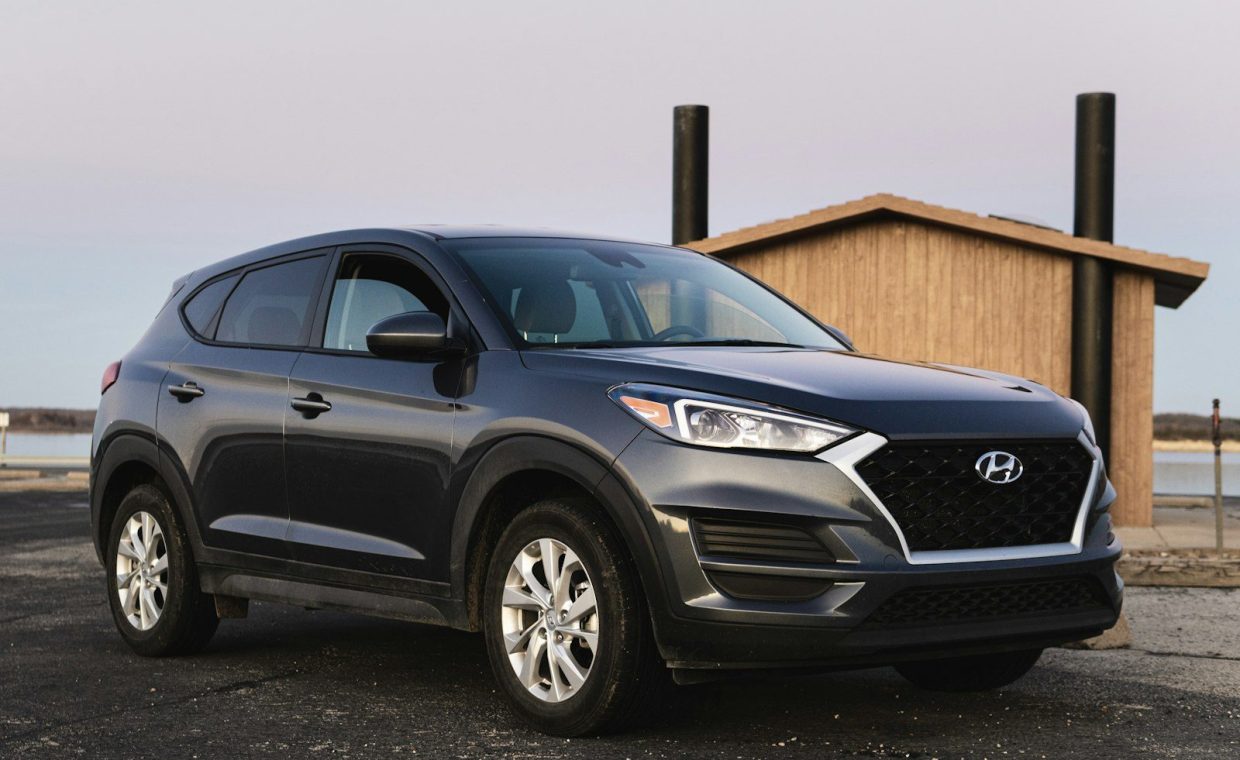
Now we get to the car that changed the conversation. The fourth-generation Tucson, launched for 2022, is the one Sandra traded into. It does not look like a value pick. The angular front end with the hidden lights tucked into the grille is the kind of styling that usually carries a German price tag.
Inside, the jump is bigger than the photos suggest. Sandra's 2024 SEL has a clean dual-screen layout, soft materials where your elbows land, and rear seats roomy enough that her now-teenage kids stopped complaining on long drives.
The 2022 redesign added meaningful rear legroom, a stiffer body, available hybrid and plug-in hybrid powertrains, and an interior that no longer apologizes for the price. It moved from "good enough" to "genuinely competitive."
The hybrid is the one to care about if you are watching your fuel budget. Sandra averages around 37 to 38 mpg in her commute, a leap from the mid-20s she lived with in the old car. Over a year of driving, that difference is real money, not a rounding error.
The money math, generation by generation
I am skeptical of any review that talks about value without numbers, so here is roughly how Sandra's three points of contact with the Tucson lineup compare. These figures are illustrative, drawn from her real ownership and typical market pricing, not a formal study.
| Generation | What she paid | Real-world mpg | The feeling |
|---|---|---|---|
| 2012 (used, bought 2016) | around $14,000 | roughly 24 | A sensible appliance |
| 2018 (test-driven, skipped) | around $25,000 new | roughly 26 | Better, still cautious |
| 2024 Hybrid SEL (current) | around $34,000 | roughly 37 | A car she likes driving |
Notice the price climbed. That is the honest catch nobody mentions. As the Tucson got good, it stopped being the rock-bottom bargain it once was.
The value argument changed shape. It is no longer "cheapest thing that runs." It is "more car than the price tag implies," which is a harder, more grown-up kind of value to judge.
How it stacks up against the new wave of rivals
The Tucson is not coasting on a weak field. The RAV4 Hybrid still posts strong economy and bulletproof resale, and the CR-V remains the polished default choice. Where the Tucson wins is content for the money, that long warranty, and a cabin that feels a class above on the inside.
If you are stepping up in size, the same Hyundai-family logic shows up in its corporate cousin. We dug into that in our first drive of the Kia Telluride and whether the hype holds, and the pattern rhymes: aggressive pricing, surprising refinement, a brand that used to be an afterthought.
Cross-shop the Tucson Hybrid against the RAV4 Hybrid on out-the-door price, not sticker. Hyundai dealers often have more room to move, and the longer warranty has real cash value if you keep cars past 60,000 miles.
What to watch before you sign
Skepticism is the job here, so let me flag the soft spots. Early dual-clutch Tucsons (2016 to roughly 2018) can feel jerky at parking-lot speeds, and some owners reported transmission complaints. If you are buying used in that range, drive it hard in stop-and-go traffic before you fall in love.
The newer cars are smoother, but the base infotainment on lower trims is plainer than the marketing photos. Make sure the screen you test is the one your trim actually comes with.
Hyundai's 10-year/100,000-mile powertrain warranty only fully transfers to the original buyer. A second owner gets the shorter 5-year/60,000-mile coverage. If you buy used expecting that famous long warranty, check what actually carries over.
And do not let a good car talk you out of good discipline. Sandra walked away from a 2023 model a dealer tried to load with $2,400 in add-ons, then bought the same trim clean a week later for less. That kind of patience is exactly what saved the buyer in our story about how walking away from the table saved thousands.
So is it actually a class leader now?
By the measures most families care about, space, economy, tech, and total cost over years of ownership, yes. The Tucson earned its way up rather than buying the title.
It is not the default everyone reaches for out of habit, and that is fine. It is the smart-money pick that rewards the buyer who does a little homework.
The Tucson evolved from a cheap appliance into a genuinely competitive SUV. The 2022-onward redesign is the inflection point, and the hybrid is the value sweet spot at roughly 37 to 38 mpg. The catch: it costs more than it used to, so judge it on content-per-dollar, not rock-bottom price. Watch early dual-clutch models, confirm the trim you test, and check exactly what warranty transfers if you buy used.
Which Tucson generation is the best value to buy used?
The 2022 and newer fourth-generation cars give you the biggest jump in interior quality, space, and efficiency. If your budget is tighter, a clean later third-gen (2019 to 2021) avoids the early dual-clutch quirks while still feeling modern.
Is the Tucson Hybrid worth the extra cost over the gas model?
If you drive a lot, yes. Going from the mid-20s to roughly 37 to 38 mpg adds up over a year, and the hybrid drives smoother in traffic. For low-mileage drivers, the payback stretches out and the gas model can make more sense.
Does Hyundai's long warranty still apply if I buy a used Tucson?
Only partly. The headline 10-year/100,000-mile powertrain coverage is for the original owner. A second owner gets 5 years or 60,000 miles. Always confirm the in-service date and remaining coverage before you buy.
Sandra keeps that old fob in the drawer as a kind of bookmark. It marks the moment the Tucson was just the cheapest sensible choice, before it grew into a car she would recommend on merit. If you are weighing one, judge it on what it gives you per dollar today, not the bargain-bin reputation it carried a decade ago. That is the most honest way to shop, and it is usually the way you end up happy.