
Owen stood over an open toolbox last Saturday morning, coffee going cold on the bench, trying to decide which weekend jobs were actually worth doing himself. The wipers needed swapping, the brake fluid felt overdue, and a check engine light had been nagging at him all week. Three jobs, one driveway, and a real question underneath all of it: which of these saves money, and which one ends with a car he is afraid to drive to work?
That is the same question I have been answering for people for twenty-some years, and the honest trick to DIY is not bravery. It is knowing exactly where your skill ends and where a lift, a torque spec, or a $4,000 diagnostic computer begins. I have a pretty clear line in my head between jobs that save you real money with almost no downside and jobs that can hurt you, strand you, or cost more to fix than they would have cost a shop. Here is how I sort them.
1. Oil and Filter Changes: The Gateway Job
If you only ever learn one repair, make it this one. An oil change is honest work. You drain the old stuff, swap the filter, refill with the grade in your owner's manual, and you are done. The parts are cheap and the failure modes are obvious.
The two mistakes I see most often are a forgotten drain plug gasket and an overtightened filter. Snug the plug to spec, hand-tighten the filter plus three-quarters of a turn, and check for leaks after the first drive.
Buy a cheap fluid extractor or a set of ramps before your first change. Crawling under a car held up by a flimsy jack is the fastest way to turn a $40 job into an ambulance ride.
This is also the cornerstone of a good tune-up routine for an older car, where regular oil service does more for longevity than almost anything else you can bolt on.
2. Wiper Blades, Cabin Filters, and the Easy Wins
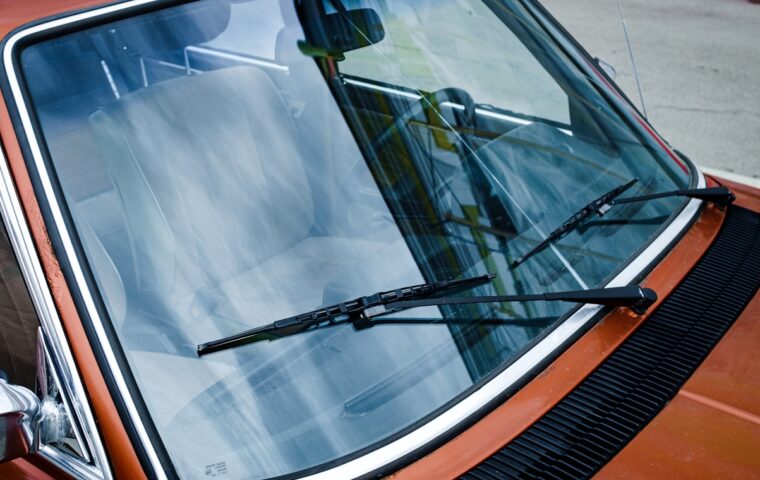
I lump these together because they are the jobs that build confidence. A set of wiper blades clips on in two minutes. A cabin air filter usually hides behind the glovebox and pops out with a couple of tabs.
Shops will happily charge you $30 in labor to swap a $12 filter, and I do not blame them, but you can keep that money. Watch one video for your specific model, because the glovebox release varies, and you will never pay for it again.
Battery terminal cleaning lives here too. A wire brush, a little baking soda and water on the corrosion, and a dab of dielectric grease will fix a surprising number of slow-crank complaints for almost nothing.
3. Brake Pads: The Honest Middle Ground
Here is where DIY gets interesting. Replacing brake pads is absolutely doable in a driveway, and on a lot of cars it is straightforward: one caliper bracket, two slide pins, push the piston back, swap the pads. I have taught teenagers to do it in an afternoon.
But brakes are the one system where a mistake does not just cost money, it costs you a stopping distance you cannot get back. So I put pads in the "DIY with respect" column, not the "easy" column.
If you find scored rotors, a stuck caliper, a seized slide pin, or a worn-down inner pad you did not catch, stop and reassess. Hanging a caliper by its hose or reusing junk hardware is how good intentions become a $2,000 repair.
And do not skip the break-in. Fresh pads need to be seated properly, so read up on how to bed in new brake pads and rotors before you trust them in traffic. Skipping that step is why some DIY brake jobs squeal and judder for the life of the pad.
4. Jump-Starts and Battery Swaps: Cheap Insurance
Everybody should be able to do this, and almost nobody is taught it correctly. A dead battery on a cold morning is not a tow-truck event. It is a ten-minute job if you have cables or a small lithium jump pack in the trunk.
The order matters more than people think. Connect the cables in the right sequence, keep the clamps away from moving parts, and never let the ends touch. If you are fuzzy on any of that, spend five minutes with our walkthrough on how to jump-start a car safely before you need it at 6 a.m. in a parking garage.
Replacing the battery outright is just as friendly. Disconnect negative first, then positive, swap the battery, reverse the order, and clean the terminals while you are in there. On most cars this is a single-wrench job.
Some newer cars need the new battery registered to the charging system with a scan tool, and a few bury the battery under a seat or in the trunk. Check your manual first. If it calls for registration, that part is worth a quick shop visit.
5. Reading Codes vs. Actually Diagnosing
A $25 OBD-II scanner is one of the best tools a regular owner can buy. When the check engine light comes on, pulling the code yourself tells you whether you are looking at a loose gas cap or something serious before anyone quotes you a dime.
That said, a code is a starting point, not a diagnosis. A P0420 does not automatically mean "buy a catalytic converter." It means something in that emissions loop is unhappy, and the real cause might be an upstream sensor or an exhaust leak.
I read codes at home all the time. I let the shop do the actual diagnostic tree when the answer is not obvious, because guessing at parts is the single most expensive habit in car ownership. Throwing a $400 sensor at a problem that turned out to be a $15 vacuum hose is a story I hear every week.
What Belongs at the Shop, Full Stop
Some jobs are not about skill, they are about equipment, safety, and liability. I will gladly tell a customer to do their own oil and pads, and in the same breath tell them to leave the following alone.
| Job | Why it belongs at the shop |
|---|---|
| Timing belt or chain | One slip can bend valves and total the engine. Needs precise timing and special tools. |
| Transmission internals | Hundreds of tiny parts, exact clearances, and a clean room mentality. |
| A/C system service | Refrigerant is regulated, requires recovery equipment, and can frostbite you. |
| Airbags and SRS | Live pyrotechnics. Mishandling can deploy them into your face. |
| Major suspension and alignment | Spring compressors and alignment racks are not driveway gear. |
There is no shame in any of this. A good independent mechanic is not your enemy. They are the person who keeps the job you started from turning into the job that buys their kid's braces.
How to Decide in the Moment
When I am on the fence about a repair, I ask three quick questions. Can this hurt me if I get it wrong? Can it strand me far from home? Will a mistake cost more than the shop quote?
If the answer to all three is no, roll up your sleeves. If any one of them is a clear yes, that is your sign to make a phone call instead.
Do your own fluids, filters, wiper blades, battery work, brake pads, and code reading. Hand off timing components, transmissions, A/C, airbags, and heavy suspension work. The money you save on the easy jobs more than pays for the hard ones.
Will doing my own repairs void my warranty?
No, not on its own. You are allowed to perform your own maintenance and use quality aftermarket parts. A dealer can only deny a warranty claim if they prove your specific work caused the failure, so keep your receipts and a simple service log.
What tools should a first-time DIYer actually buy?
Start small. A solid socket set, a torque wrench, a pair of jack stands (never just a jack), a basic OBD-II scanner, and gloves will cover most of the jobs on this list. Add tools as specific repairs demand them, rather than buying a giant kit you mostly never touch.
How do I know when a "DIY" job is suddenly over my head?
The moment you find something the tutorial did not mention, a seized bolt, a stripped thread, a part that will not budge, stop and reassess. Forcing it is what turns a small repair into a tow. Walking away to call a pro is a skill, not a failure.
I will always nudge people toward doing more of their own work, because there is real satisfaction in fixing the thing you depend on every day. Just be honest with yourself about which side of the line a job sits on. Start with the easy wins, build your confidence one repair at a time, and keep a trusted mechanic's number saved for the days the job grows teeth.