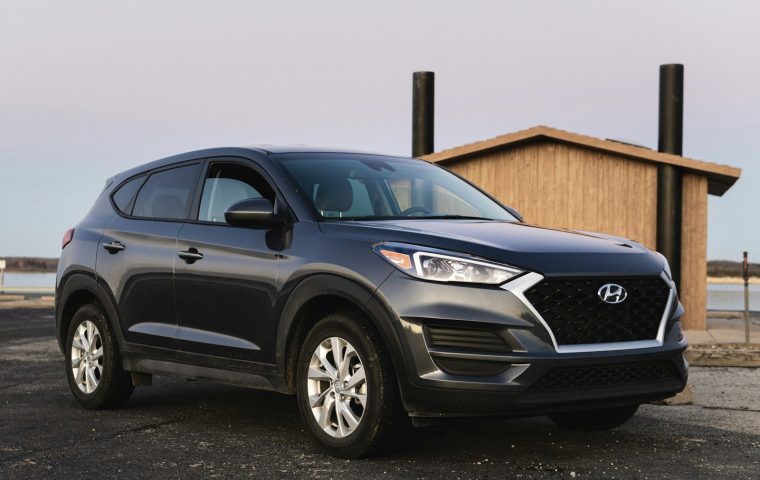


Pull out of a parking spot in the turbo Mazda CX-5 and it leans into the throttle right away, eager and a little playful, the steering tightening as you bend into the first corner. Climb straight into the Honda CR-V afterward and the mood flips. It feels calm, quiet, and instantly familiar, the kind of car that asks nothing of you and just glides toward the next light. Back to back on the same loop, the two cars practically argue with each other.
That contrast is the whole fight in one drive. The Mazda CX-5 and the Honda CR-V are both excellent, both dependable, and both sitting in roughly the same price bracket. But they are built around two different ideas of what a daily SUV is for, and you can feel that split in the first half mile.
I have spent real seat time in both, hauling kids, dogs, drywall, and the occasional road-trip suitcase pile. Here is how each one actually fits into a life, not just a spec sheet.
The Two Personalities, Honestly
The CX-5 is the SUV for people who quietly miss driving. It has a steering feel that most rivals abandoned years ago, an interior that looks like it cost more than it did, and a chassis that stays composed on a twisty back road.
The CR-V is the SUV for people who want the decision over with. It is roomier, more efficient in hybrid form, and so widely trusted that resale almost takes care of itself. It rarely thrills you, and it rarely lets you down.
Neither approach is wrong. The mistake is buying one and expecting it to behave like the other.
Driving Feel and Power
Behind the wheel, the gap is obvious in the first mile. The Mazda turns in crisply, the weight builds naturally, and the optional turbo engine gives you genuine shove when you need to merge.
The Honda is calmer and quieter, tuned for smoothness over sport. Its hybrid setup is the smarter pick for commuters, sipping fuel in stop-and-go traffic where the Mazda just drinks.
Drive both back to back on the same loop, ideally one that has a highway on-ramp and a few corners. The showroom parking lot tells you nothing about how a car feels at 65 mph.
If your daily route is a freeway slog, the CR-V Hybrid will save you real money at the pump. If your route has character, the CX-5 will reward you for taking the long way home.
Space, Seats, and Real Cargo
This is where the dog crate test comes in. The CR-V is simply the bigger box. Rear legroom is generous, the cargo floor is wide and flat, and tall passengers stop complaining.
The CX-5 trades some of that room for its sharper styling. The cabin feels richer and more snug, but a rear-facing child seat or a third adult back there starts to feel like a negotiation.
Who needs the extra room
Growing families, road-trip households, and anyone who hauls gear should lean Honda. Empty nesters, couples, and city drivers who value cabin quality over raw volume will be perfectly happy in the Mazda.
If you regularly carry rear-facing car seats, measure before you fall in love. I have watched buyers get emotionally attached to a cabin, then discover their stroller does not clear the hatch.
Tech, Cabin Quality, and the Daily Touchpoints
Mazda put its money into materials. The CX-5 dash, the stitching, and the switchgear feel a class above the price tag, which is rare in this segment.
Honda chose usability. The CR-V's touchscreen, physical climate knobs, and intuitive layout are easy to live with on day one, no learning curve required.
One quirk worth flagging: Mazda still leans on a rotary control dial instead of a fully touch screen while driving. Some people love it, some find it fussy. It is worth twenty minutes in the seat to find out which camp you fall in.
Cost of Ownership and Resale
Both brands have strong reliability reputations, so you are not gambling on a lemon either way. The real money differences show up over years, not at the signing table.
The CR-V Hybrid usually wins on fuel and tends to hold resale value extremely well, which matters more than buyers expect. If you are the type who upgrades every few years, that retained value is basically money back in your pocket.
The CX-5 is competitive on running costs, though the turbo trims ask for premium fuel to hit their full output. Budget for that if you go for the punchy engine.
Both of these climb in price fast as you add packages. A loaded CX-5 turbo or a top CR-V hybrid can wander into entry-level luxury territory, where the value math changes completely.
When the time comes to part with either one, a little prep goes a long way. A few of the smartest trade-in value tips can mean the difference between a fair offer and getting lowballed at the dealer counter.
Side by Side
| Factor | Mazda CX-5 | Honda CR-V |
|---|---|---|
| Driving feel | Sharp, engaging, premium | Smooth, quiet, relaxed |
| Best engine pick | Optional turbo for real punch | Hybrid for efficiency |
| Rear seat and cargo | Cozier, style-first | Roomier, family-first |
| Interior quality | Class-above materials | Practical and easy to use |
| Fuel economy | Good, premium on turbo | Excellent in hybrid form |
| Resale strength | Strong | Very strong |
| Best for | Drivers who enjoy driving | Families who want zero fuss |
So Which One Wins, and For Whom
If you light up when a car steers well, want a cabin that feels expensive, and do not need to move a small household every weekend, the Mazda CX-5 is your car. It is the one you actively enjoy owning.
If your priority is space, fuel savings, and a vehicle that just works for a decade without drama, the Honda CR-V is the safer, smarter call. It is the appliance that happens to be very good.
For the genuinely torn, ask yourself one question: do you want to look forward to the drive, or do you want to stop thinking about the car entirely? That answer picks for you.
And if neither quite clicks, it might be worth widening the net. Plenty of shoppers cross-shop these against a wagon-style alternative, which is exactly why the Subaru Outback inspires such fierce owner loyalty among people who want trail capability with a car-like drive.
CX-5 for the joy of driving and a premium cabin. CR-V for space, hybrid efficiency, and worry-free ownership. Both are safe bets, so buy the one that matches how you actually live.
One last bit of buying wisdom: whichever you choose, do not let the finance office rush you, and check the used market too if a new one stretches the budget. The same caution that keeps people out of used luxury sedan buying traps applies here, since a lightly used CX-5 or CR-V can be a brilliant value if the history checks out.
Is the Mazda CX-5 or Honda CR-V more reliable?
Both have strong reliability reputations, so neither is a risky buy. The CR-V edges ahead on long-term resale and hybrid efficiency, while the CX-5 holds up well and rewards you with a nicer cabin and better driving feel.
Which one is better for a family with kids?
The CR-V, for most families. It has more rear legroom and a larger, flatter cargo area, which makes car seats, strollers, and road-trip luggage far easier to manage than in the cozier CX-5.
Should I get the turbo CX-5 or the hybrid CR-V?
Pick based on your route. The turbo CX-5 is the choice if you crave power and enjoy spirited driving, just budget for premium fuel. The hybrid CR-V wins for commuters who want the best fuel economy and lower running costs.
Most buyers, for the record, land on the CR-V, and the cargo space usually seals it. But plenty of them still slip behind the wheel of a CX-5 every time they are bored at the dealership, which tells you everything about how close this race really is. Go drive both, trust your own grin, and buy the one that fits the life you actually have.