
A buddy of mine, Brett, bought a used Mustang GT a couple summers back and immediately started shopping for a supercharger. Then he took it to an autocross day on a whim. He came back grinning and a little humbled, because a guy in a stock Miata with sticky tires had walked away from him through every corner.
That stuck with him. He never did buy the supercharger. Instead he spent a fraction of that money on tires, a sway bar, and an alignment, and his lap times dropped more than any amount of crank horsepower would have managed.
Cornering grip is the most underrated performance you can buy. It makes a car feel alive on a back road, it builds your confidence, and unlike a big power number, you actually use it every single drive. Here are nine upgrades I'd reach for, roughly in the order that gives the most payoff per dollar.
1. Better Tires (Start Here, Always)
If you do nothing else on this list, do this. Tires are the only thing touching the road, and a sticky set of summer performance tires will transform a car more than any bolt-on suspension part.
The jump from all-season rubber to a proper max-performance summer tire is genuinely shocking the first time you feel it. Turn-in gets crisp, mid-corner grip climbs, and the car stops washing wide when you ask for more.
Match the tire to your climate and use. A track-focused 200-treadwear tire is miserable in cold rain. If you see real winter, keep a separate set of all-seasons or winters and swap seasonally rather than compromising both ways.
2. A Proper Performance Alignment
This is the cheapest real handling upgrade nobody talks about. Most cars leave the factory with conservative alignment specs tuned for tire life and easy straight-line tracking, not for carving corners.
Adding a little negative camber up front keeps more of the tire's contact patch planted when the body rolls into a turn. Dialing in toe settings sharpens or calms how the car responds the instant you move the wheel.
You can usually get an aggressive street alignment done for around the price of a normal one, sometimes a touch more. Tell the shop how you drive, and bring numbers if your car has a known good street spec.
3. Upgraded Sway Bars (Anti-Roll Bars)
Sway bars control body roll, the lean you feel when the car leans onto its outside tires in a corner. A thicker bar resists that lean and keeps the tires at a better angle to the road.
Here's the part people miss: sway bars are also your handling balance tuning knob. A stiffer rear bar reduces understeer and makes the car rotate more eagerly. A stiffer front bar calms a tail-happy car down.
Adjustable bars let you fine-tune that balance at the bolt instead of guessing. It's one of the most satisfying upgrades because the change in character is immediate and obvious.
Going too stiff in the rear can make a car snappy and nervous at the limit, especially in the wet. Start with a moderate setting, learn how the car responds, then adjust. Sharper is not always better if it scares you in the rain.
4. Stiffer, Shorter Springs (Lowering Done Right)
Lowering springs reduce ride height and stiffen the spring rate, which cuts body roll and drops the center of gravity. Both help the car feel more planted and react quicker to your inputs.
The trap is going too low or pairing cheap springs with worn factory dampers. That gives you a harsh, bouncy ride with no real handling benefit, and you'll start scraping driveways.
If you lower the car, get an alignment afterward. Geometry changes the moment you alter ride height, and ignoring that quietly chews through tires the same way skipping basic maintenance quietly wrecks an engine.
5. Coilovers (When You Want It All)
Coilovers combine adjustable springs and dampers in one unit, and the good ones let you tune ride height, stiffness, and rebound independently. This is the package upgrade for someone who's serious.
The catch is that coilovers are where the budget bites. Cheap eBay sets ride like a plank and fade fast, while quality units cost real money but feel composed and last for years.
Bargain coilovers are a classic case of chasing a spec sheet over real feel. I've driven cars made worse by cheap "30-way adjustable" units than they were on stock suspension. Buy quality over adjustability claims, or don't bother.
6. Polyurethane Bushings and Solid Mounts
Factory rubber bushings flex under load, and that flex shows up as vague, delayed steering response. Stiffer polyurethane or spherical bushings tighten everything up so the car reacts the instant you turn the wheel.
The difference is most noticeable in a worn older car. Replacing tired control arm and subframe bushings can make a 150,000-mile chassis feel a decade younger.
Just know the tradeoff. Stiffer bushings transmit more road noise and vibration into the cabin, so a full poly setup can get buzzy on long highway drives. Pick your spots.
7. A Front Strut Tower Brace
A strut brace ties the tops of the front strut towers together so the chassis flexes less under hard cornering loads. On a stiff modern unibody the effect is subtle, but on older or convertible chassis it can be genuinely felt.
Where you'll notice it is turn-in precision and how consistent the car feels when you load it up mid-corner. It firms up that slightly mushy sensation some cars have when you really lean on the front end.
It's a cheap, bolt-in part, so I treat it as a nice finishing touch rather than a foundation. Don't expect it to fix a car that's still riding on old all-seasons.
8. Lighter Wheels (Unsprung Weight Matters)
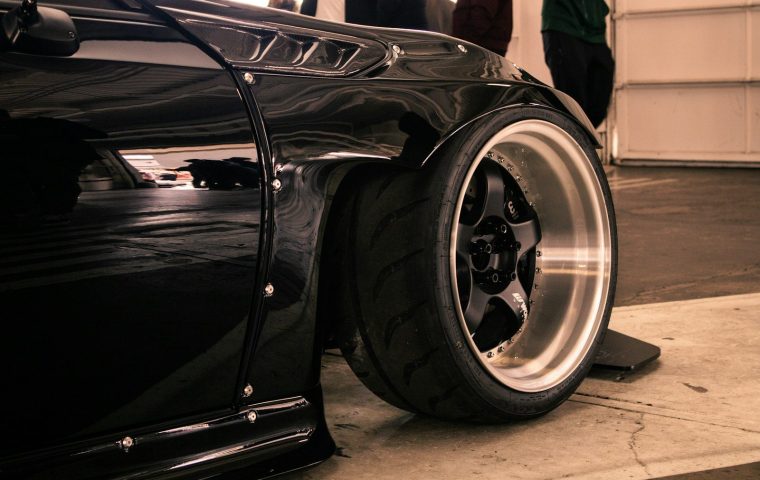
Every pound you remove from a wheel and tire counts double, because it's both rotating mass and unsprung weight. Lighter wheels let the suspension follow bumps faster and reduce the inertia the car fights mid-corner.
The handling benefit is real but easy to undo. People buy huge 20-inch wheels for looks, add weight, and wonder why the ride got worse and the steering feels lazy.
If sharper handling is the goal, often the smartest move is a smaller diameter wheel with a taller tire sidewall. You gain compliance, you can run a wider tire footprint, and a lightweight forged or flow-formed wheel keeps unsprung mass down.
9. Brakes That Hold Up to Hard Cornering
Brakes aren't a cornering part on paper, but confidence under braking changes how aggressively you can attack a corner. If your pedal goes soft after two hard stops, you'll brake early and carry less speed everywhere.
For most people the answer isn't bigger rotors, it's better pads and fresh fluid. A good performance pad and high-temp brake fluid solve fade for a fraction of what a big brake kit costs.
Whatever you fit, take the time to bed in the pads and rotors properly before you push hard. Skip that step and even great parts will judder and underperform.
Tires first, then alignment, then a sway bar. Those three give the biggest handling jump for the least money. Springs, coilovers, bushings, braces, wheels, and brakes refine the car from there. Spend in that order and you'll never feel like you wasted a dollar.
The thread running through all of this is restraint. It's easy to over-spend and end up with a car that's stiff, loud, and no faster on a real road, which is exactly how chasing big numbers can quietly ruin an otherwise good build. Grip you can actually use beats a spec sheet you can brag about.
What single upgrade improves cornering the most for the money?
Tires, with no real competition. A quality set of summer performance tires changes turn-in, grip, and confidence more than any suspension part at a similar price. Start there before you touch anything else.
Will lowering my car always make it handle better?
Not automatically. Done right with matched springs, good dampers, and a fresh alignment, lowering helps. Done wrong, with cheap springs on worn shocks or a slammed ride height, you get a harsh, bouncy car that handles worse and eats tires.
Do I need expensive coilovers, or are springs and sway bars enough?
For most street drivers, good tires, a performance alignment, and a quality sway bar setup deliver most of the gain you'll ever use on public roads. Coilovers make sense once you're doing track days or want full ride-height and damping control.
Build your car around grip you'll feel on every drive, not a dyno chart you'll mention at parties. Get the tires and the basics sorted, drive it for a few weeks, and let the car tell you what it actually wants next. That patient, in-order approach is how you end up with something genuinely fun instead of merely modified. See you on the back roads.