
Holly was convinced she needed a $4,000 turbo kit to make her Civic feel quicker. She had the money set aside and a tab open on the order page when she asked me to weigh in. I talked her into letting me drive it first, and within a block I could tell what it actually needed: it was breathing through a clogged factory airbox, riding on cheap tires, and the throttle felt like wet cardboard.
We spent about $600 total. New tires, a cold air intake, a tune, and a fresh set of plugs. She texted me a week later saying it felt like a different car. That is the thing people miss about going fast on a budget. The cheap stuff often delivers the biggest grin per dollar, and it does it without putting your engine on a ventilator.
So here are eight bolt-on upgrades I actually recommend to people who want to feel a difference this weekend, ranked roughly by how much enjoyment you get for the cash you part with. I have done every one of these in my own driveway or on a lift, and I will be honest about which ones are worth your time.
1. A Proper Set of Tires
I know, tires are not glamorous, and half of you already scrolled past. But nothing else on this list changes how your car drives more than the four contact patches connecting it to the road.
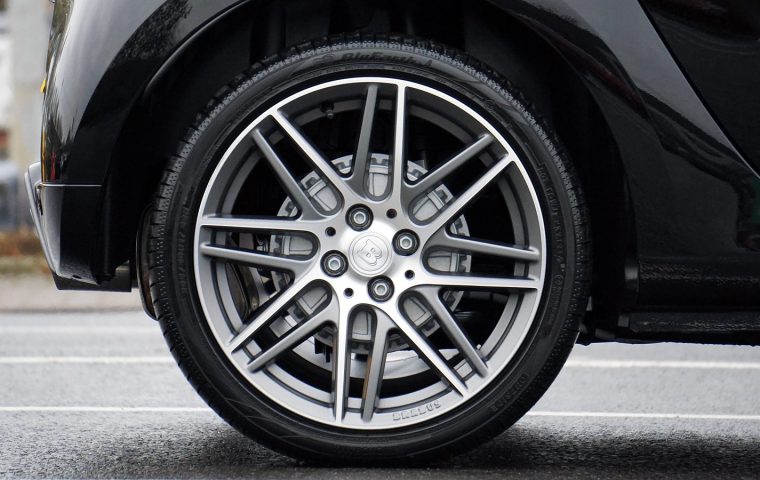
A good summer or all-season performance tire transforms braking distance, cornering grip, and steering feel more than any intake or exhaust ever will. You can throw 30 horsepower at a car, but if it cannot put the power down, you just spin and look silly.
Budget roughly $500 to $800 for a set on a typical sedan. Skip the no-name brands and the dry-rotted closeout deals. This is the single best money you will spend, full stop.
Check the date code stamped on the sidewall (a four-digit number). Tires that have been sitting in a warehouse for three years are not the bargain they look like, even brand new.
2. A Cold Air Intake
Here is where I get a little less excited than the marketing wants me to be. A cold air intake does help, but the gains are modest, usually a few honest horsepower on most naturally aspirated engines.
What you really buy is sound and throttle response. The car feels more eager because you can hear it pulling air, and that intake growl makes you smile every time you merge. For around $150 to $300, that is a fair trade.
One caution: avoid mounting the filter where it sucks up hot engine bay air or, worse, rain. A heat soaked intake actually loses power. Good ones route the filter to cool, dense air from outside the engine bay.
3. A Cat-Back Exhaust
A cat-back system replaces everything from the catalytic converter back. It frees up a little flow, drops some weight, and most importantly, it sounds fantastic when it is done right.
Power gains are small on most stock engines, maybe 5 to 10 horsepower. But the character change is huge. Your daily commuter suddenly has a personality, and that is worth a lot to a lot of people.
Spend the money on a quality stainless system, around $400 to $900 depending on the car. Cheap exhausts drone at highway speed until you want to rip them off, and they rust out in two winters. Buy once, cry once.
Never gut or remove your catalytic converter to chase noise or numbers. It is illegal in most places, fails emissions, and stinks. A cat-back leaves the cat in place, which is exactly why it stays on the right side of the law.
4. An ECU Tune
This is the sleeper hit of the budget world. On a turbocharged car especially, a quality tune can wake up 30, 40, even 60 horsepower because the factory leaves a lot on the table for warranty and worldwide fuel quality reasons.
Naturally aspirated engines see smaller gains, but the throttle mapping and shift logic improvements still make the car feel sharper everywhere. For $400 to $700, few upgrades hit this hard.
That said, a tune is also where people get themselves in trouble. Cheap downloaded maps that crank boost with no supporting work are exactly the kind of thing I cover in my piece on the tuning mistakes that blow up engines. Use a reputable tuner who knows your platform.
5. Performance Brake Pads and Fresh Fluid
Going faster is fun. Stopping reliably is what keeps you alive and keeps the front end of your car out of someone's trunk.
A set of better pads, around $80 to $200, plus fresh high-temp brake fluid, gives you firmer pedal feel and far more confidence when you actually need to haul it down from speed. If you do any spirited canyon or track driving, this is non-negotiable.
Upgrading tires and brakes together is the smartest one-two punch on this list. More grip plus more stopping power is the foundation everything else should sit on. Do these before you chase horsepower.
6. A Short Shifter or Shifter Bushings
If you drive a manual, this one is criminally underrated. A short shift kit, or even just replacing worn rubber shifter bushings with poly ones, tightens up that vague, sloppy gear change into crisp, mechanical clicks.
Bushings can run as little as $40. A full short shifter is usually $150 to $300. Neither adds a single horsepower, but the car suddenly feels like it costs twice as much to drive.
I put poly bushings in an old Miata of mine on a Saturday afternoon with hand tools, and it remains one of my favorite cheap mods ever. Pure tactile joy for nearly nothing.
7. A Lowering Spring Set or Quality Sway Bars
Want your car to actually handle better and look the part? A modest lowering spring kit, around $250 to $450, drops the center of gravity, reduces body roll, and tightens up the stance.
If you would rather keep the factory ride height and comfort, a thicker rear sway bar does wonders for cornering balance for even less money. It lets the car rotate more eagerly without beating you up on bad pavement.
Just keep your expectations sane. Slamming a daily driver onto the ground rides terribly, eats tires, and scrapes every driveway. Mild and well matched beats extreme every time.
8. A Good Set of Spark Plugs and an Oil Change
Yes, I am ending a performance list with maintenance, and I will not apologize for it. A tired engine with worn plugs and old, broken-down oil cannot make the power it already has, let alone any you bolt on.
Fresh plugs (the correct heat range for your car) and the right oil restore the snappy running condition the factory intended. The whole job often costs under $100 in parts. Plenty of "my mod did nothing" complaints trace back to a motor that was just neglected.
This ties into a hard truth I keep repeating: the fastest way to lose power and money is the slow grind of the maintenance mistakes that destroy engines. Keep the basics fresh and every other upgrade works better.
If you only have money for two things this month, do tires and brakes. They make every drive safer and more enjoyable, and they do not stress your engine one bit.
| Upgrade | Rough Cost | What You Feel |
|---|---|---|
| Tires | $500-$800 | Grip, braking, steering feel |
| Cold air intake | $150-$300 | Sound, throttle response |
| Cat-back exhaust | $400-$900 | Sound, mild power, weight loss |
| ECU tune | $400-$700 | Real power (big on turbos) |
| Brake pads and fluid | $80-$200 | Stopping confidence |
| Short shifter | $40-$300 | Crisp shift feel |
| Springs or sway bars | $250-$450 | Handling, stance |
| Plugs and oil | Under $100 | Restored baseline power |
One more thing before you start ordering parts. Every modification you make is a small trade against simplicity and long-term peace of mind, which is something I get into in my honest look at the reliability cost of modding. Pick a few quality upgrades and stop. The guy with three smart mods almost always has a better car than the guy with thirty cheap ones.
Will any of these void my warranty?
It depends on the part and your dealer. Bolt-ons like tires, brakes, and a cat-back rarely cause issues. ECU tunes are the one to be careful with, since they leave a footprint and can give a dealer grounds to deny a related powertrain claim. Keep your stock parts and a stock tune file just in case.
What single upgrade gives the most noticeable difference for the money?
Tires, without much debate. They change braking, cornering, and steering feel all at once, and they do it on day one. A close second on a turbo car is a reputable ECU tune, which can add real horsepower for a few hundred dollars.
Can I install most of these in my own garage?
Many of them, yes. Intakes, shifter bushings, brake pads, plugs, and oil are weekend-friendly with basic hand tools and a little patience. Lowering springs require a spring compressor and some care, and an ECU tune is best left to a professional with the right software and dyno time.
Start with the boring, safety-first stuff, then add character one piece at a time and actually drive between each change so you can feel what it did. That is how you build a car you love instead of a parts bin on wheels. Drop me a line at the shop if you get stuck, and keep the shiny side up out there.