

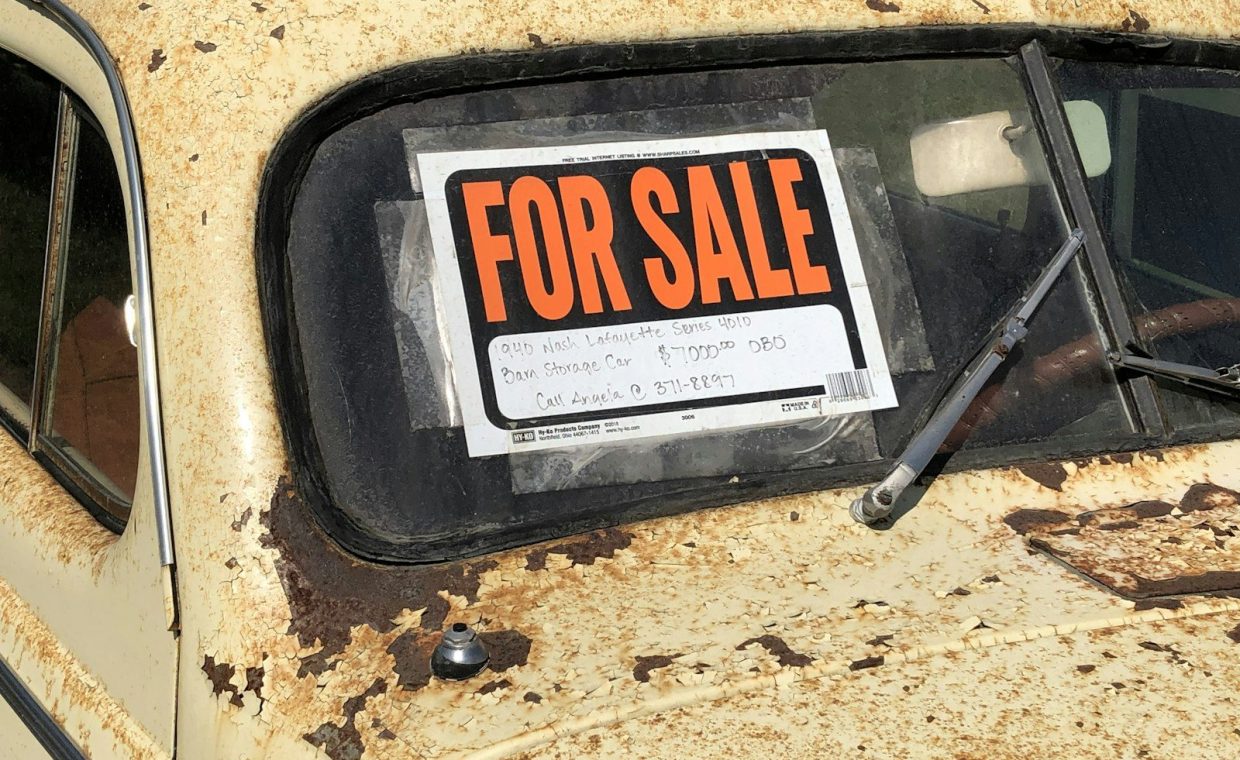
Bianca keeps glancing at the odometer in her reliable hatchback, watching it creep toward 100,000 miles. The car has never let her down, but the next big service is looming, and she is trying to decide whether to sell now or hand over a few hundred dollars to keep it going. That single decision, made well or made late, is the difference between selling a car that still has value and watching that value quietly drain away.
Selling at the right moment is not about luck or a gut feeling. It is about reading three signals (mileage, repair pattern, and depreciation) before they quietly add up against you. Let me walk through each one.
Mileage Is a Cliff, Not a Slope
Most owners think value drops smoothly with every mile. It does not. Buyers shop in round numbers, so resale value tends to step down at psychological thresholds like 60,000, 100,000, and 150,000 miles.
Here is a concrete example. A used crossover listed at 98,000 miles will often fetch a few hundred dollars more than the identical car at 103,000 miles, even though five thousand miles is nothing mechanically. The buyer's eye snags on the six-figure number, not the actual wear.
The myth worth dispelling: "Low miles always means more money." Not quite. A garage-kept car that sat for years can need more work than a high-mileage commuter that ran daily on the highway. Buyers are getting wise to this, so condition and service history can matter as much as the odometer.
If your car is creeping toward a round-number milestone, list it a few thousand miles before you hit it. Crossing 100,000 on a Tuesday can cost you real money by Friday.
The Repair Pattern Tells You More Than One Bill
A single expensive repair is not a reason to sell. A pattern of them usually is.
Think of it this way. When the alternator, then the water pump, then the suspension bushings all go within a year, the car is telling you the rest of its parts are roughly the same age and heading the same direction. You are not fixing problems anymore. You are pre-paying for the next three.
The rule I use is simple. When a year of repairs starts approaching what the car is actually worth, the math has flipped. Spending $2,000 on a vehicle worth $4,000 is one thing. Spending $2,000 a year on a car worth $3,500 means you are renting an old vehicle at new-car prices.
The "Sunk Cost" Mistake
The classic mistake is treating past spending as a reason to keep spending. Money already gone cannot be earned back by throwing more after it. The only question that matters is the next twelve months, not the last five years.
Knowing when to stop is the same instinct that protects buyers. One reader of ours walked away from a deal mid-handshake, and that story of how a buyer saved thousands by walking away is really just sunk-cost discipline pointed in the other direction.
If your mechanic starts a sentence with "while we're in there," you are entering pattern territory. One "while we're in there" is fine. Three in a year is the car asking to be sold.
Depreciation: The Cost You Never See on an Invoice
Repairs hurt because you write a check. Depreciation hurts more, but quietly, because nobody hands you a bill for it.
Every month you own a car, it is worth a little less, and that loss is real money even though it never leaves your wallet directly. A vehicle that drops from $18,000 to $15,000 over a year cost you roughly $250 a month in value, on top of fuel, insurance, and maintenance.
Here is the part most owners miss. Depreciation is steepest in the early years and flattens out later. So the worst time to sell, financially, is often the first two or three years, when the curve is dropping fastest and you eat the biggest loss.
| Ownership stage | Typical depreciation pace | What it means for selling |
|---|---|---|
| Years 1-3 | Fastest drop | Worst stretch to sell at a loss |
| Years 4-7 | Slowing down | Often the value sweet spot |
| Years 8 and up | Slow but repairs climb | Sell before repairs outpace value |
The myth here: "I'll wait until the market is better." Used-car prices swing, sure, but you cannot reliably time the market on a single vehicle. The depreciation curve is far more predictable than any price spike, and it is working against you every single month you wait.
Match the Strategy to the Car You Own
Not every car ages the same way, and the right exit depends on what you bought in the first place.
Some models hold value stubbornly well. A clean Subaru Outback can keep a strong resale price years in, partly because the owners who love them tend to keep them and partly because demand stays steady. Our Subaru Outback review on why owners stay loyal digs into that staying power, and if you own something like that, you have more breathing room before depreciation forces your hand.
Other cars shed value fast, especially loaded luxury trims and anything with a reputation for pricey repairs. With those, the sweet spot comes earlier, and waiting "just one more year" is exactly how owners get burned.
Before you decide, look up what your specific make, model, and trim sells for at your current mileage versus a year out. Two cars bought the same day can have completely different ideal selling windows.
Reading the Combined Signal
Mileage, repairs, and depreciation rarely scream at you one at a time. They whisper together, and the smart move is to watch where they overlap.
When your car is approaching a mileage threshold, the repairs are starting to cluster, and the depreciation curve has already flattened to where you are not losing much more, that overlap is your green light. You are selling something that still works, before it becomes something nobody wants to buy.
The owners who get burned are usually the ones who only watched one signal. They tracked the odometer but ignored the repair pattern, or they obsessed over a future price bump while the car aged out from under them. Many of the same blind spots show up on the buying side too, which is why understanding common used-car buying mistakes and their fixes helps you sell smarter, since you learn to think like the careful buyer you are trying to attract.
Getting the Car Ready to Sell
Once the signals line up, a little preparation protects the price you worked out.
Gather your service records, fix the cheap cosmetic stuff (a burned-out bulb or a missing trim clip reads as neglect), and be honest about condition in the listing. Buyers reward transparency with faster, cleaner sales, and they punish surprises with lowball offers.
Sell before a round-number mileage threshold, before repairs start clustering, and after the steepest depreciation has passed. Watch all three signals together, not one in isolation, and know your specific model's value curve before you decide.
Should I fix a major problem before selling or sell as-is?
It depends on the repair cost versus the value it adds back. A cheap, visible fix like brakes or a battery usually pays for itself in buyer confidence. A costly internal repair often does not, so getting a few quotes and comparing them to as-is offers tells you which way to go.
Is it better to sell privately or trade in?
Private sales almost always net more money, sometimes a lot more, but they take time and effort. A trade-in is faster and can reduce sales tax in some states. If you value your weekends and the price gap is small, the dealer route can be worth it.
How do I know my car's real selling value?
Check several pricing tools for your exact year, trim, and mileage, then look at what similar cars are actually listed for near you. Listed prices and real selling prices differ, so the local market is your best gauge.
None of this requires a crystal ball, just a willingness to look at the numbers honestly before sentiment takes over. Bianca has the signals now, and so do you, so watch them, trust them, and sell while the car still has a story worth buying.