

There is a quiet fear sitting behind a lot of EV shopping, and it sounds something like this: the battery is going to wear out the way a three-year-old phone does, dropping from a full day of life to a frantic search for a charger by lunch. People picture the same swollen, useless cell in a car that cost forty thousand dollars, and they brace for a replacement bill with a comma in it.
That fear is worth taking seriously, but it does not match what actually happens to an electric car over 100,000 miles. A phone battery and a car battery live in completely different worlds, with different chemistry, different cooling, and different software watching over them. So let me walk you through what really goes on inside that pack, what the range loss looks like at real mileage, and where the scary myths quietly fall apart.
What Battery Degradation Actually Is
Degradation is the slow, permanent shrinking of how much energy your battery can hold. Think of a fuel tank that very gradually gets a little smaller every year. The car still drives identically, but the maximum you can store at 100 percent slips downward over time.
It happens because of chemistry, not abuse. Every charge and discharge cycle nudges the lithium ions around inside the cells, and a tiny fraction of them get locked up in places they can no longer leave. Heat, time, and how you charge all influence the pace.
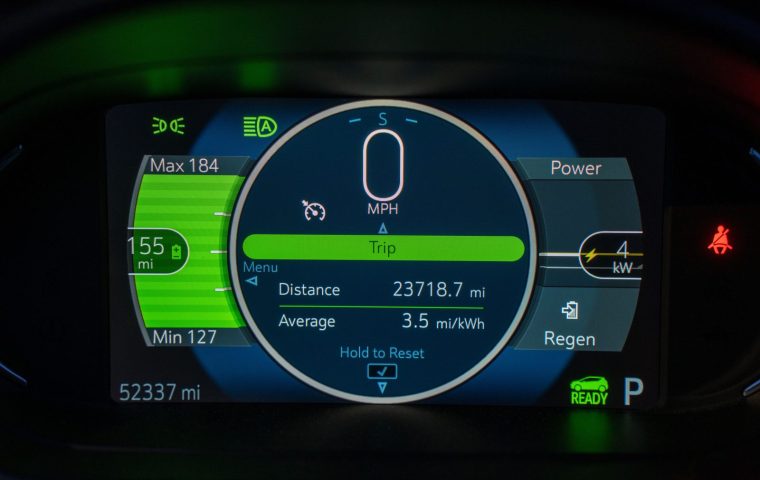
A concrete example: say your EV launched with about 270 miles of usable range. After several years and tens of thousands of miles, a typical pack might settle around 250 miles. You lost roughly 20 miles, spread so gradually you would never feel it on any single drive.
Capacity loss is permanent. Temporary range drops from cold weather, a heavy right foot, or highway speeds are not degradation. They come back the moment conditions change.
The myth: degradation is a cliff
The fear is that one morning you wake up and the battery has fallen off a ledge. That is not how lithium packs age. The curve is steep-ish at the very start, then flattens into a long, slow slope. Most of your scary-sounding loss happens in the first year or two, then the line nearly goes horizontal.
The Numbers Buyers Actually See
Industry data and owner reports tend to land in a similar place. Most modern EVs lose somewhere around 1 to 2 percent of capacity per year on average, front-loaded toward the early life of the pack. That early dip is why your range estimate drops a touch in the first few months and then seems to stabilize.
Here is a rough way to picture the trajectory over a vehicle's life. Treat these as illustrative, not gospel, because climate and charging habits move the needle.
| Mileage | Typical capacity retained | What it feels like |
|---|---|---|
| 0-20,000 mi | 96-99% | A small early dip, easy to miss |
| 20,000-60,000 mi | 92-96% | Slow, steady, barely noticeable |
| 60,000-100,000 mi | 88-93% | A few miles shorter, still very usable |
| 100,000+ mi | 85-90% | Plenty for daily driving |
Notice what is missing from that table: a collapse. A pack holding 85 to 90 percent at six figures of mileage is normal and healthy. If you are cross-shopping models on how far they go before any of this matters, my breakdown of EVs with the strongest real-world range is a good place to start, because a longer starting number gives you more buffer against any future loss.
Why Heat Is the Real Enemy
If degradation has a villain, it is sustained heat. High temperatures speed up the chemical reactions that age cells, which is why a pack that bakes in Phoenix summers tends to fade faster than the same car living in a mild coastal climate.
This is also why good thermal management matters so much in a used EV. Cars with active liquid cooling protect their packs far better than older designs that relied on passive air. When you shop used, the cooling system is worth more attention than the odometer.
Parking in shade or a garage on brutally hot days is one of the easiest, cheapest things you can do for long-term battery health. You are not babying the car. You are just keeping the cells out of the oven.
Cold is different from heat
Here is the part people mix up. Cold weather slashes your range temporarily, but it does not meaningfully degrade the pack. Winter range loss is reversible, and it returns the moment things warm up. If frigid mornings are eating your numbers, that is a usability issue you can plan around, and my guide to squeezing range out of an EV in the cold covers the practical moves. Heat shortens the battery's life. Cold just shortens your Tuesday commute.
How Charging Habits Move the Needle
How you feed the battery matters more than how often. The two habits that age a pack fastest are living at very high states of charge and leaning hard on DC fast charging for every fill.
Sitting at a full 100 percent for long stretches stresses the cells. So does running the pack down to near zero on the regular. The sweet spot for daily use is keeping it roughly between 20 and 80 percent, which is exactly why most EVs let you set a charge limit in software.
A real scenario: two identical cars, both driven 12,000 miles a year. One charges to 80 percent at home overnight on a Level 2 charger. The other slams DC fast chargers to 100 percent constantly because it is convenient. After five years, the gentle car will almost always show a noticeably healthier pack.
Charging to 100 percent every single night for a 30-mile commute. You are storing energy you never use at the one state of charge that stresses the battery most. Set the limit to 80 percent and forget about it.
The myth: fast charging will kill your battery
Occasional DC fast charging on road trips is fine. The cars are engineered for it, and the battery management system actively protects the cells by tapering the speed as you fill. The damage story only holds up if fast charging is your only method, day after day. Use it on trips, charge slow at home, and you have nothing to worry about.
Software, Warranties, and Your Safety Net
Two things quietly protect you here, and buyers rarely give them enough credit.
The first is the warranty. Most EVs carry a battery warranty around 8 years or 100,000 miles, and many guarantee the pack will retain at least 70 percent capacity in that window. If your battery degrades faster than the chemistry should, that is the manufacturer's problem to fix, not yours.
The second is software. Automakers periodically refine how the battery is managed, and some of those tweaks arrive without a visit to the dealer. If you are fuzzy on how that works, my explainer on how over-the-air updates actually reach your car lays it out. An update will not magically restore lost cells, but a smarter charging strategy or a more accurate range estimate can absolutely change what you see on the dash.
An 8-year warranty floor, active thermal management, a sensible 20-80 percent charging habit, and the occasional software refinement. Stack those and serious degradation becomes a rare problem, not an expected one.
How to Read a Used EV's Battery Health
If you are buying used, you do not have to guess. Many EVs will show you a battery health or state-of-health figure through the car's menus or a third-party app that plugs into the diagnostic port.
On a test drive, charge the car to full and compare the projected range against the original window-sticker number. A car that shows 250 miles on a model that launched with 270 is sitting at a perfectly normal 92 percent or so. A car showing a much steeper drop deserves harder questions.
Also ask how the car lived. A pack that spent its life on home Level 2 charging in a moderate climate is a different animal from one that was hammered on fast chargers in desert heat, even at identical mileage.
How much range will I really lose in the first five years?
For most modern EVs, expect to land somewhere around 90 to 95 percent of your original capacity after five years of normal use. The biggest dip happens early, then the loss slows to a crawl. A car that started near 270 miles might show roughly 250, which you would barely feel day to day.
Does fast charging permanently damage the battery?
Occasional DC fast charging on trips is fine and the car is built for it. The pack only ages faster if fast charging is your everyday method instead of slower home charging. Mix in regular Level 2 charging at home and you remove almost all of the concern.
Should I worry about replacing the battery out of pocket?
For the vast majority of owners, no. Battery warranties typically run 8 years or 100,000 miles with a capacity floor, and real-world failures outside abuse or defect are uncommon. Most people trade the car long before the pack becomes a financial question.
So if your range dips a few percent in the early going, take a breath. That is the battery behaving exactly as designed, not a warning light for your wallet. Charge it sensibly, keep it out of brutal heat when you can, and a healthy EV pack will quietly outlast most of the worries people pin on it. Treat the panic as the loud part and the data as the honest part, and the EV battery question mostly takes care of itself.