
The first time I watched someone get frustrated at a fast charger, it was a guy in a rented sedan at a highway plaza near Harrisburg. He plugged in, saw 170 kilowatts flash on the screen, grinned, and walked off to get coffee. By the time he came back, the number read 38, and he was convinced the charger was broken.
It wasn't broken. His car was doing exactly what it was designed to do. The charging speed had tapered, which is the polite engineering word for "slowed down on purpose."
That gap between the headline number on the charger and the actual speed you get is where most confusion lives. So let me walk through what a charging curve really is, why your car throttles itself, and how to read a session so you stop blaming the hardware for choices the battery is making.
The charging curve is the real number, not the peak
When a carmaker advertises "350 kW charging" or "10 to 80 percent in 18 minutes," they are quoting a single moment, usually the highest point in a graph called the charging curve. The curve plots how fast power flows into the battery from empty to full.
It is almost never a flat line. It starts low, climbs to a peak somewhere in the early portion of the charge, holds for a bit, then slopes down as the battery fills. Picture a hill that rises fast, levels off, then descends the rest of the way.
Here is a concrete example. A car rated at a 250 kW peak might only hit that number for two or three minutes around the 20 percent mark. By 60 percent it could be down to 120 kW, and by 80 percent it might be crawling at 50 kW or less.
The advertised kilowatt figure is the ceiling, not the average. A useful mental model is to assume your real average over a session will be roughly half to two thirds of the peak number, depending on the car and how full the battery already is.
The common myth is that a higher peak always means faster charging. Not necessarily. A car with a lower peak but a flatter, more sustained curve can finish a 10 to 80 percent session sooner than a car that spikes high and then collapses.
Tapering: why the car slows itself down on purpose
Tapering is the gradual reduction in charging speed as the battery approaches full. It is not a malfunction and it is not the charger giving up. It is the car's battery management system protecting the cells.
Think of filling a glass of water from a tap. You can blast it wide open when the glass is mostly empty. As it nears the rim, you ease off so it doesn't overflow. Lithium battery chemistry works on a similar logic. Cramming energy into nearly full cells generates heat and stress, so the car dials the rate back to keep things safe and to preserve long-term battery life.
This is exactly why charging from 80 to 100 percent on a road trip is such a poor use of time. Those last twenty points can take as long as the first sixty did. Most experienced EV drivers unplug around 80 percent on a long drive and let the next stop handle the rest.
On a long drive, target 10 to 80 percent at fast chargers, not a full 100. You spend less time waiting and you keep the car in the steepest, most efficient part of the curve. Save the top-up to 100 for slow charging overnight.
The myth here is that stopping at 80 means you are "wasting" range. You aren't. You are trading a few miles of buffer for a large chunk of saved time, and the math almost always favors moving on. If you care about keeping the pack in good shape over the years, those habits line up neatly with how to keep an EV battery healthy long term.
State of charge is the biggest lever you control
State of charge, usually shortened to SoC, is simply how full the battery is at a given moment. It is the single factor that most determines your charging speed, and it is the one drivers control most easily.
Arriving at a fast charger with 8 percent left puts you right at the bottom of the curve, where the car can accept power quickly. Arriving with 55 percent already in the battery means you start partway up the hill, past the fastest section, so you never see those big numbers at all.
A real scenario: two identical cars pull into the same station. One is at 10 percent, the other at 50 percent. The car at 10 percent might pull 180 kW immediately. The car at 50 percent might sit at 90 kW from the moment it plugs in, because that is all the curve allows at that fill level. Same charger, same car model, completely different speeds.
| State of charge | Where you are on the curve | Typical relative speed |
|---|---|---|
| 5-20% | Bottom, fastest acceptance | Near peak |
| 20-50% | Climbing then leveling | Strong, starting to ease |
| 50-80% | Steady downslope | Moderate and falling |
| 80-100% | Deep taper | Slow, often very slow |
The takeaway is plain. If you want to see fast numbers, plug in with a low battery. Topping up from already-comfortable levels will always look sluggish, and that is normal.
Battery temperature: the quiet factor nobody mentions
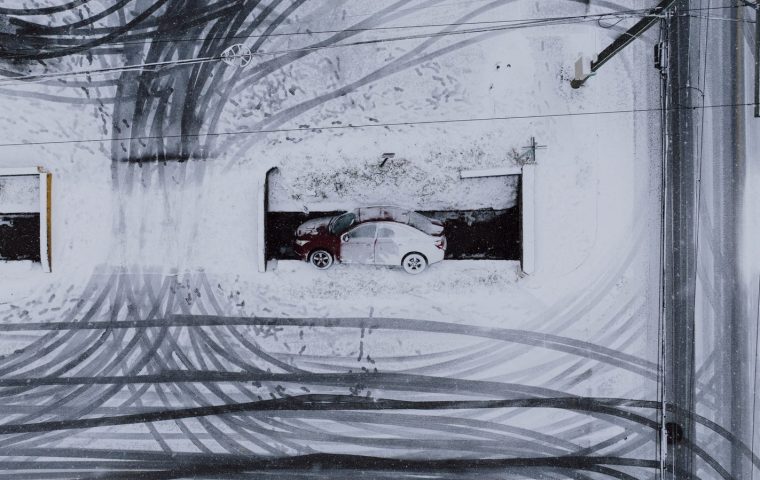
A cold battery charges slowly. This catches a lot of new EV owners off guard, especially in winter. The chemistry simply cannot move ions quickly when the pack is cold, so the car limits the rate to avoid damage.
Here is the concrete version. Drive an hour of highway before a fast charge in summer and the battery is warm, happy, and ready to gulp power. Roll up to the same charger on a freezing January morning after a short trip, and you might see a fraction of the speed, even at 10 percent SoC.
This is why many EVs have battery preconditioning. When you set a fast charger as your navigation destination, the car warms the pack on the way so it arrives at the right temperature. If your car has that feature, use it, because skipping it in cold weather is one of the most common reasons people report "slow" charging that has nothing to do with the station. I dug into the cold-weather side of ownership more in this winter EV story without a home charger.
If you arrive at a fast charger with a cold battery and no preconditioning, expect slow speeds for the first several minutes while the pack warms itself. This is the car protecting the cells, not a fault. The number usually climbs as the battery heats up.
The myth to drop here is that a slow start always means a faulty charger. More often it means a cold battery, and the fix is patience or preconditioning, not a different plug.
Charger power versus car power: the lower number wins
A charger and a car each have a maximum power they can handle, and the actual rate is capped by whichever is lower. Plug a car that maxes out at 150 kW into a 350 kW station and you still only get 150. The extra capacity sits unused.
This trips people up constantly. They see a 350 kW charger, expect 350 kW, and feel cheated when their car pulls 120. The charger is fine. The car simply cannot accept more than its own limit, no matter how powerful the post is.
It also runs the other way. A 350 kW car on a 50 kW charger is stuck at 50. The hardware on the wall is the bottleneck that time. Knowing both numbers, your car's peak and the station's rating, tells you what to realistically expect before you even plug in.
When an app lists a stall as "150 kW" or "350 kW," that is the charger's ceiling. Your real speed is the lower of that number and your car's own peak, then reduced further by your state of charge and battery temperature. All four factors stack.
Shared cabinets and why a "fast" charger can feel slow
Many charging sites split power between two stalls that share one cabinet. If someone is already charging on the paired stall, you might get half the rated output until they finish or their car tapers off.
So you can pull into a 350 kW stall, see only 90 kW, and assume your car is the problem when really you are sharing a cabinet with the truck two spaces over. Moving to a fully independent stall, if one is open, can sometimes double your speed instantly.
None of this shows up on the screen in plain language, which is why understanding the system matters. The number you get is a negotiation between the car, the charger, the temperature, the fill level, and sometimes a stranger's vehicle next to you. While we are on car tech that confuses people, charging quirks remind me of how often drivers blame the wrong component, the same way they do when they try to fix car Bluetooth problems that turn out to be a phone setting.
A quick way to sanity-check a slow session
- Check your state of charge. Above 60 percent, slow is expected.
- Check the temperature. Cold pack means a slow start.
- Check the stall rating against your car's peak. The lower wins.
- Look for a shared-cabinet neighbor on the paired stall.
Run through those four and most "broken charger" mysteries solve themselves.
Real charging speed is set by your state of charge, battery temperature, the lower of the car or charger power limit, and whether the cabinet is shared. The advertised peak kilowatt number is a brief high point, not what you get the whole time. Charge from low, stop around 80 percent on trips, and warm the pack in winter.
Why does my charging speed drop so much after 80 percent?
That is tapering. As the battery fills, the car deliberately slows the rate to protect the cells from heat and stress. The last twenty percent can take as long as the first sixty, which is why most drivers unplug around 80 percent on road trips.
Will a more powerful charger always charge my car faster?
No. Your car has its own maximum acceptance rate, and the real speed is the lower of the two. If your car peaks at 150 kW, a 350 kW station still gives you 150 at best, and that drops further as the battery fills or if the pack is cold.
Why is charging so slow in winter?
A cold battery cannot accept power quickly, so the car limits the rate until the pack warms up. Driving a while before charging or using your car's preconditioning feature heats the battery in advance and restores normal speeds.
Once you start reading a charging session as a conversation between the car and the charger, the frustration mostly fades. You stop expecting a flat line, you plug in when the battery is low, and you let the curve do its thing. The guy in Harrisburg eventually came back, saw the slow number, and learned the same lesson everyone does at some point. The charger was never the problem.