
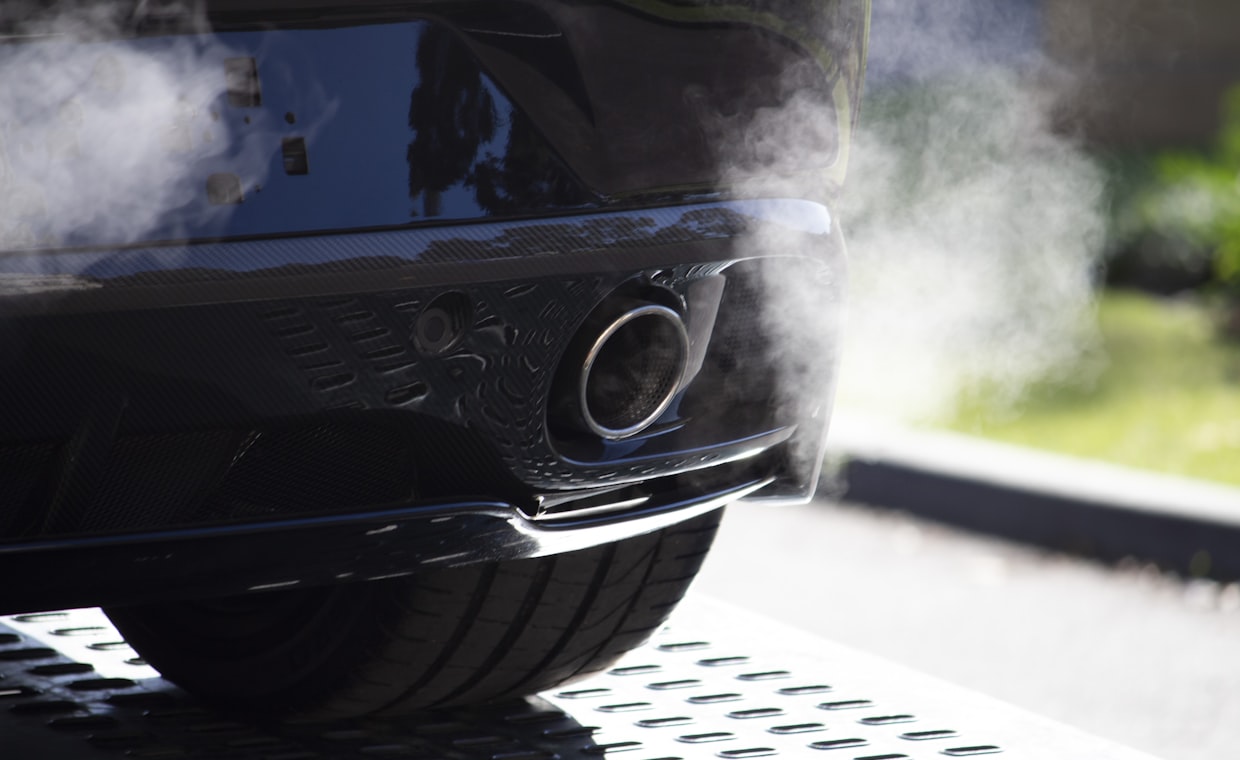
A friend texted me a video last spring: his Mustang GT, freshly fitted with an axle-back, barking through the gears in a parking garage. The echo made it sound like a race weekend. Then he asked the question everyone asks after the honeymoon fades. "So how much power did I actually gain?"
The honest answer was "almost none, and that's fine." He did not buy that exhaust for a dyno number. He bought it because his car finally sounds like the engine he already loved. That gap, between what an exhaust does for your ears and what it does for your crank, is where most people get confused and where a lot of money gets wasted.
So let me walk you through what these parts do, where the real gains hide, and the upgrades I would tell my own brother to skip.
What Your Exhaust Is Really Doing
Every gas engine is basically an air pump. It pulls air in, burns it with fuel, and shoves the leftovers out. Anything that makes the "out" part easier, up to a point, lets the engine breathe better.
The catch is that "up to a point." Factory exhaust systems are built for quiet, cheap, and legal, in that order. That means restrictive mufflers, tight bends, and pipes sized for comfort rather than flow. There is genuine room to improve on a lot of stock setups, especially on turbocharged cars where backpressure matters more.
But room to improve is not the same as free horsepower waiting behind a $1,200 stainless system. The size of the gain depends entirely on how choked your car was to begin with.
The Parts, Decoded
Exhaust shopping throws a lot of jargon at you. Here is the plain version.
Axle-Back
This swaps the last section, from the rear axle to the tips. It is almost purely a sound and looks upgrade. Power change is basically a rounding error. It is also the cheapest and easiest to install, which is exactly why it is the most popular first mod.
Cat-Back
This replaces everything from the catalytic converter back: mid-pipe, muffler, tips. You get more sound change and usually a small, real flow improvement. On naturally aspirated engines the gain is modest. On turbo cars it can be a touch more meaningful.
Headers and Downpipes
Now we are upstream, close to the engine, where the pressure is high and the flow gains actually live. Headers (on N/A cars) and downpipes (on turbo cars) are where an exhaust upgrade stops being cosmetic and starts moving the dyno needle. They are also the most expensive, the hardest to install, and the most likely to trip emissions rules.
The closer a part sits to the engine, the more power it tends to free up and the more legal and tuning headaches it brings. The farther back it sits, the more it is about sound and shine.
Sound Versus Power: The Honest Split
Here is the truth nobody selling exhausts leads with. On most street cars, a full cat-back system adds somewhere in the low single digits of horsepower, if that. You will feel the sound long before you feel the shove.
That is not a scam. A great note is a legitimate reason to spend money. I have bought exhausts purely because a car sounded flat and I wanted it to sing. Just be honest with yourself about which box you are checking, the "power" box or the "goosebumps" box.
The power box gets filled by the stuff nobody photographs for Instagram: a proper tune, the parts up front, and the whole intake and exhaust path working together. If you want the flow side of that story, my breakdown of cold air intakes explained covers the other end of the same air pump and why the two are best planned as a pair.
Where the Real Money Should Go
If your goal is measurable performance per dollar, an exhaust is rarely the first thing I would buy. It is a good thing to buy, just not the highest-value one. For a full ranking of what actually earns its keep, I keep pointing readers to my list of the best value bolt on upgrades, and exhausts usually land in the middle, not the top.
Here is roughly how the common paths compare on a typical enthusiast car. Prices are ballpark and vary a lot by platform.
| Upgrade | Rough cost (parts) | Real power gain | Sound change | Legal risk |
|---|---|---|---|---|
| Axle-back | $300 - $700 | Negligible | Moderate | Low |
| Cat-back | $700 - $1,500 | Small | Large | Low to medium |
| Headers (N/A) | $500 - $1,500 | Moderate | Large | High |
| Downpipe (turbo) | $400 - $900 | Moderate to large* | Large | High |
*That downpipe gain only shows up with a supporting tune. Bolt one on without retuning and you may get more noise, worse fuel trims, and a check engine light for your trouble.
What I Would Tell You to Skip
Some exhaust products exist mostly to separate enthusiasts from their cash. Fake muffler tips that bolt over your factory pipe do nothing but add chrome. "Performance" tips in general are jewelry, not engineering.
Skip anything sold on a claimed power figure with no dyno sheet, no platform data, and no tune mentioned. If a $250 muffler promises 15 horsepower, that number is marketing, not physics. This is one of the most common traps I cover in my rundown of performance myths waste money, and exhaust hype earns a starring role in it.
I would also skip the loudest option available just because it is loudest. Volume and quality are not the same thing. A well-designed system sounds rich and purposeful. A cheap loud one just gives you a headache at 70 mph.
Materials, Drone, and the Neighbor Test
Aluminized steel is cheaper and rusts sooner. T304 stainless costs more and lasts. If you live where roads get salted, pay for the stainless. It is the difference between one exhaust and two.
Then there is drone, the boomy resonance at cruising rpm that turns a cool car into a road-trip torture device. Read owner reviews for your exact platform before buying. Some systems are wonderful at idle and miserable at 75. A resonator or a helmholtz chamber in the design usually tames it.
Will a cat-back exhaust really add horsepower?
A little, usually low single digits on a street car. The bigger, guaranteed change is sound. Buy it for the note and treat any power as a small bonus.
Do I need a tune after installing an exhaust?
An axle-back or cat-back, no. Headers or a turbo downpipe, yes. Those parts change flow enough that a supporting tune is what actually turns the hardware into usable power.
Is a louder exhaust always faster?
No. Volume tracks muffler design and diameter, not horsepower. Plenty of loud systems make no extra power, and some quiet ones flow beautifully. Judge by data, not decibels.
An exhaust is one of my favorite upgrades, as long as you know why you are buying it. If you want your car to sound alive every time you start it, spend the money and enjoy every mile. If you are chasing real numbers, put the exhaust in its proper place in the plan and let the tune and the front-end parts do the heavy lifting. Pick honestly, and you will not regret it either way.