
The first time I rolled into the paddock at a local road course, I had a cooler of energy drinks, a borrowed helmet, and almost no idea what I was doing. My buddy's old Miata pulled in next to me with a torque wrench, a tire gauge, and a roll of blue painter's tape, and I remember thinking he was overprepared. Three sessions later, his car was still running clean and mine had cooked its brake fluid into a spongy mess by lap four.
That gap between us had nothing to do with horsepower. It was prep. A track day punishes the stuff you ignore on the street, and it does it fast, because you are holding the brakes and the throttle longer and harder than your daily commute ever asks.
The good news is that getting a stock street car ready for its first track day is mostly checklist work, not a build. Here is the sequence I wish someone had walked me through before that first sketchy morning.
Start With the Brakes, Because They Fail First
On the street, your brakes get a few hard stops a day and a lot of time to cool off. On track, you are scrubbing speed from triple digits over and over with almost no rest, and the heat builds in the fluid until it boils.
Boiled brake fluid means a pedal that sinks to the floor. That is the single most common scary moment for first-timers, and it is almost entirely preventable.
Two things to check before you go. First, your pads. If you have less than half the pad material left, replace them, because track use eats pads in a hurry. Second, your fluid.
Flush your brake fluid with a fresh high-temperature DOT 4 fluid within a week of your track day. Old, moisture-laden fluid boils at a much lower temperature, and a soft pedal at the end of a long straight is exactly where you do not want a surprise.
You do not need exotic race fluid for a first outing. A good off-the-shelf high-temp DOT 4 from a parts store, around $15 a bottle, is a massive upgrade over whatever has been sitting in your lines for three years.
Bleed and Check Every Fluid Under the Hood
Brakes get the headline, but every fluid in the car works harder on track. Engine oil runs hotter, coolant runs hotter, and your transmission and differential feel it too.
Make sure your oil is fresh and filled to the top of the safe range, not the bottom. Sustained high-rpm running can move oil around in ways your daily driving never does, and you want margin.
Coolant is the other big one. An engine that runs fine in traffic can creep toward the red after twenty minutes of wide-open laps, so confirm the system is full and the cap holds pressure. If you have never done it, our walkthrough on how to check and top off your engine coolant covers the safe way to do it on a cold engine.
Write your fluid levels and tire pressures on a strip of painter's tape stuck to your door jamb. Between sessions you can glance at it and know instantly what changed.
Sort Out Your Tires and Set Real Pressures
Tires are your only contact with the road, and they are also where a lot of first-timers quietly sabotage themselves. Check the tread depth and look hard for any cracking, especially if your tires are more than five or six years old, because heat finds weak rubber.
You do not need track tires for day one. Your regular performance street tires are fine while you learn, and honestly they will teach you more about car control than a sticky tire that hides your mistakes.
Pressures are the part people get wrong. Tires heat up and gain pressure on track, often by 8 to 10 psi, so you start lower than your street setting and check them hot in the pits.
A simple hot-pressure routine
- Set cold pressures a few psi below your door-jamb number to start.
- Run one session, then check pressures immediately when you pull in.
- Bleed air down to your target hot pressure (many cars like the low-to-mid 30s).
- Repeat until the hot number holds steady session to session.
Strip the Cabin and Secure Everything Loose
This step costs nothing and prevents a lot of dumb problems. Anything loose in the cabin becomes a projectile under hard cornering, and a water bottle rolling under your brake pedal at the end of a straight is a genuine nightmare.
Pull the floor mats out so nothing can bunch up under the pedals. Empty the trunk, the door pockets, the cupholders, and the glovebox of anything that can fly around.
Turn the car upside down in your head. If a coin, a phone, or a spare lug nut would fall out and roll somewhere it shouldn't, take it out of the car before you grid up.
Check your battery tie-down while you are at it. A loose battery shifting under load is both a fire risk and an instant black flag at most tracks.
Do a Bolt-by-Bolt Safety Walkaround
Now go around the car like a tech inspector, because at most events someone will. Wheel lug nuts torqued to spec. No play in the wheel bearings when you rock the tire top and bottom. No torn CV boots slinging grease.
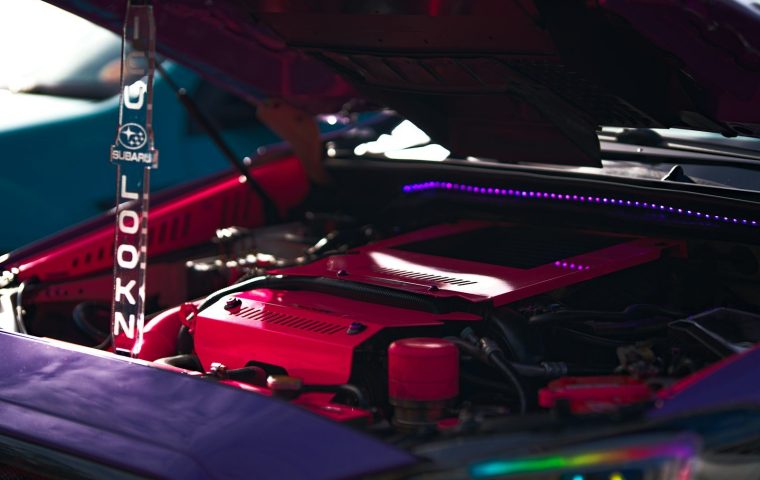
Pop the hood and tug on hoses and the battery terminals. Look underneath for any fresh leaks. Check that your throttle returns to idle cleanly and that nothing in the engine bay is loose enough to rattle free at 6,000 rpm.
If you are tempted to add parts before your first day, resist the urge to chase power. The smartest early money goes into pads, fluid, and maybe better tires, not horsepower. Plenty of the best value bolt-on upgrades are the unglamorous safety and consumable items, and they pay off the moment you start braking from real speed.
Sort Your Gear and Your Headspace
You need a helmet that meets the track's rating, usually a current or recent Snell certification. Many groups rent helmets for around $40 if you do not own one yet, so call ahead and ask.
Wear long natural-fiber clothing, cotton or wool, closed shoes, and bring more water than you think you need. Driving hard for twenty minutes at a time is far more physical than it looks from the grandstands.
Get there early, walk the track on foot if they allow it, and go to the novice meeting with questions ready. The instructors want you to come back, so they are genuinely happy to explain flags, passing rules, and lines.
Mentally, set the bar at finishing the day with the car intact and your confidence higher, not at chasing a lap time. Speed comes later. Smoothness comes first.
Know What the Track Day Will Cost the Car
Every track day uses up consumables faster than street miles, and going in clear-eyed about that keeps the hobby fun instead of stressful. A single weekend can burn through a noticeable chunk of pad and tire life, plus the fluid you flushed beforehand.
That is normal and worth it, but budget for it. This is also where a stock, well-maintained car has an edge over a heavily modified one, because reliability matters more than peak numbers when you are leaning on the car for hours.
If you are weighing future upgrades, it is worth understanding the real reliability cost of modding before you start adding power that stresses a cooling system or drivetrain you have not upgraded to match.
Fresh high-temp brake fluid and pads with plenty of life. Topped-off oil and coolant. Tires inspected with a hot-pressure plan. Cabin stripped of loose items. Lug nuts torqued, no leaks, battery secured. Helmet and proper clothing sorted. A budget for consumables and a goal of smooth, not fast.
A Realistic First-Day Timeline
Here is roughly how the prep spreads out so nothing gets rushed the night before.
| When | Task | Why it matters |
|---|---|---|
| 1-2 weeks out | Order pads, fluid, helmet rental | Avoids panic shipping and sold-out rentals |
| 3-5 days out | Flush brake fluid, change oil, inspect tires | Gives fresh fluids time, leaves room to fix surprises |
| Night before | Strip cabin, torque lugs, pack water and tools | Calm prep beats a frantic 6 a.m. scramble |
| At the track | Tech inspection, tire pressures, novice meeting | Final safety check before you ever turn a lap |
Do I need to modify my car before my first track day?
No. A stock, well-maintained street car is a great learning tool. Spend your money on fresh brake fluid, good pads, and decent tires before you spend a dime on power, because those are what keep you safe while you learn.
Will a track day void my warranty or wreck my car?
A single track day on a healthy car is not going to destroy it, but it does accelerate wear on pads, tires, and fluids. Some manufacturers do exclude track use from warranty coverage, so check your terms and keep maintenance records.
What is the one thing first-timers most often forget?
Brake fluid. People obsess over tires and horsepower and roll in with three-year-old fluid that boils by the fourth lap. A fresh flush with high-temp fluid is the cheapest peace of mind you can buy.
Your first track day is going to feel like a fire hose of new information, and that is completely normal. Do the boring prep, keep your goals modest, and let the speed sneak up on you over the next few events. I promise the day you drive home with the car running as clean as it arrived is far more satisfying than any single fast lap.