
Bridget flagged me down on a Saturday with her hood up and a jug of bright green liquid in one hand, waving like she had found buried treasure. Her temperature gauge had been creeping up on the highway, and she wanted to "just add some coolant real quick" before a road trip. The trouble was the engine had been running ten minutes earlier, the cap was still hot enough to hiss, and the jug she was holding was the wrong type for her car entirely.
That whole scene is avoidable. Checking coolant is one of the few under-hood jobs almost any owner can do safely, as long as you respect a couple of rules about heat and pressure. It takes about five minutes once you know where to look.
So let me walk you through it the way I would if I were standing next to your car in the garage. We will go step by step, and I will point out the spots where people get tripped up.
What Coolant Actually Does (and Why Low Coolant Bites You)
Coolant, sometimes called antifreeze, is a mix of a glycol-based fluid and water that circulates through your engine and radiator. It carries heat away from the engine and dumps it out through the radiator, then loops back around. It also keeps the system from freezing in winter and from boiling over in summer.
When the level drops, the engine loses its ability to shed heat. That is when the gauge climbs, the warning light pops on, and in a bad case the head gasket or aluminum components warp from the heat. Repairs in that territory can run well into four figures.
Low coolant is usually a symptom, not a random event. A slow leak, a tired hose, or a failing cap will all let the level fall. Topping off is fine as a fix for normal evaporation, but if you are adding fluid every couple of weeks, you have a leak to chase down. Letting that slide is one of those quiet maintenance mistakes that quietly destroy an engine over time.
Let the Engine Cool Down Completely
This is the rule Bridget broke, and it is the one that sends people to the emergency room. A hot cooling system is pressurized, and the coolant inside can be well above its normal boiling point. Crack the cap on a hot engine and you can get a faceful of scalding fluid and steam.
Park the car, shut it off, and wait. If the engine has been running, give it a few hours, or check first thing in the morning before you start it. Cold is best.
Never open the radiator cap or pressurized reservoir cap on a warm or hot engine. If you must check while warm because of an emergency, look at the level in the see-through overflow tank only and do not open anything sealed. Wait for cold before you touch a cap.
A quick way to gauge temperature: put your hand near (not on) the upper radiator hose. If it radiates obvious heat or feels firm and pressurized when you gently squeeze it, the system is still hot. Walk away and come back later.
Find the Reservoir and Read the Level
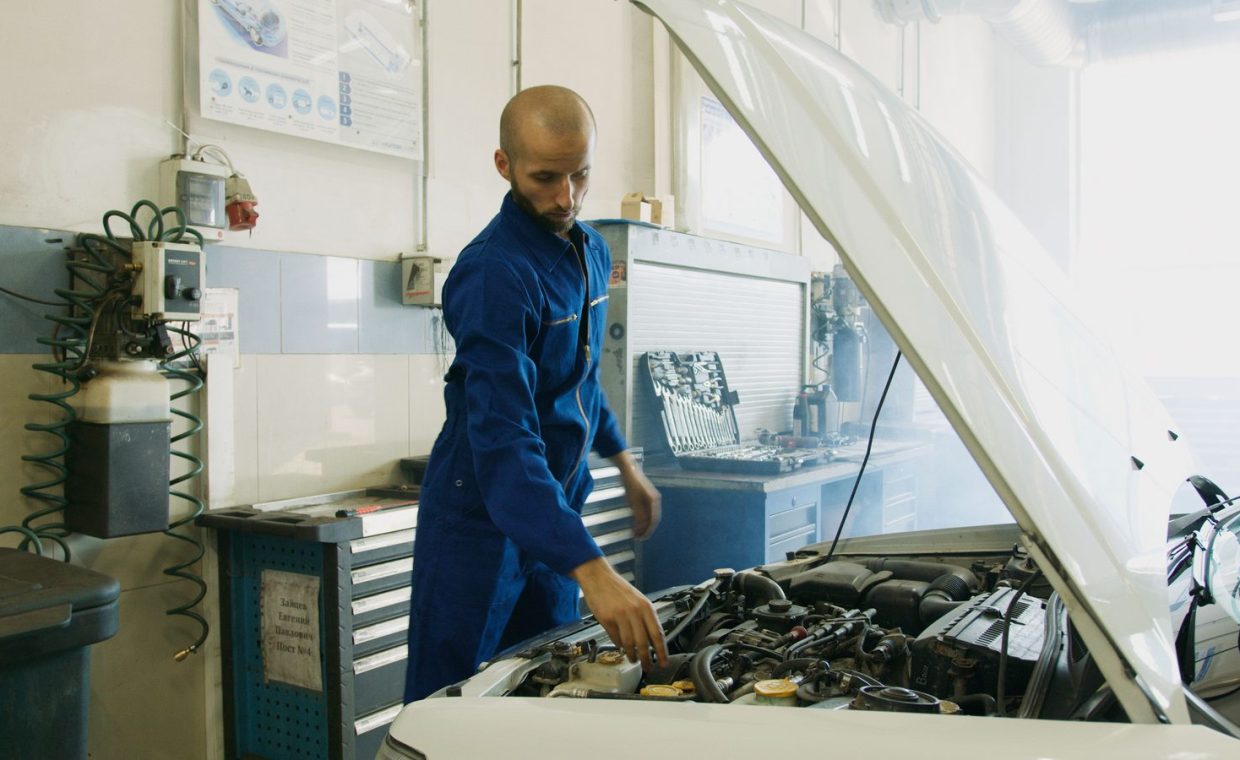
Pop the hood and look for a translucent plastic tank, usually off to one side, with markings on it. Most modern cars label it with a thermometer-in-waves symbol or the words "coolant" or "engine coolant." The cap is often yellow, white, or black.
The tank has two lines molded into the side: MIN (or LOW) near the bottom and MAX (or FULL) higher up. You want the cold level sitting between those two, generally closer to the MAX line. Read it with the car on level ground so you are not fooled by a slope.
If the fluid sits at or below MIN, you are due for a top-off. If you cannot see any fluid at all in the tank, that is a stronger sign of a leak, and I would inspect under the car for puddles or crusty residue before adding anything.
Many cars have a separate radiator cap in addition to the reservoir cap. For routine top-offs you almost always add fluid to the reservoir, not the radiator. Your owner's manual shows the right fill point for your specific car, and it takes thirty seconds to confirm.
Match the Right Coolant Type
This is where the green-jug trap gets people. Coolants are not all interchangeable, and mixing the wrong types can cause gel, corrosion, or clogged passages. The color is a hint, not a guarantee, so do not buy by color alone.
Check your owner's manual or the cap itself for the specification your car wants. You will see things like IAT (older green), OAT, and HOAT chemistries, plus brand-specific specs that automakers list by part number. Many shelves now carry a "universal" coolant, but I still prefer matching the original spec when I can.
| Type | Common color | Typical use |
|---|---|---|
| IAT | Green | Older vehicles, shorter change interval |
| OAT | Orange, red, pink | Many modern cars, long-life |
| HOAT | Yellow, orange, blue | Various European and domestic |
One more detail: some coolant comes pre-mixed (ready to pour) and some comes as concentrate that you cut with distilled water, usually around a 50/50 ratio. Pre-mix is foolproof for a top-off. If you buy concentrate, mix it with distilled water, not tap water, since minerals in tap water leave deposits.
Top Off Slowly and Check Your Work
With the engine cold, twist off the reservoir cap. Pour your matched coolant in slowly until the level reaches the MAX line. A small funnel keeps it off your paint and electronics, and it stops the dribble that always seems to happen freehand.
Do not overfill. The system needs room for the coolant to expand as it heats up, which is exactly why there is a MAX line and not a "fill to the brim" mark. Stop at MAX, wipe up any spills, and snug the cap back down until it clicks or seats firmly.
Then start the engine and let it idle for a few minutes with the heater on. Watch the gauge. Once it reaches normal operating temperature and the cooling fan has cycled, shut it off, let it cool again, and recheck the level. It is normal for it to drop slightly as air works out of the system.
Coolant is toxic to pets and wildlife, and its sweet smell attracts them. Wipe up every drop, and if you spilled on the ground, rinse and clean it. Keep the container sealed and out of reach. Never pour leftover coolant down a storm drain.
Watch for the Signs You Have a Bigger Problem
Topping off treats the symptom. If the level keeps falling, your job shifts from "add fluid" to "find the leak." A few things to look for: a sweet smell inside or outside the car, white crusty residue around hose clamps, a small puddle under the front of the car, or steam from under the hood.
White, sweet-smelling smoke from the tailpipe or a milky film on the oil cap can point to coolant getting into places it should not. That is a head gasket conversation, and it is the kind of repair where you start weighing whether to repair or replace the car depending on the vehicle's value and mileage.
If you are the type who likes to get ahead of failures, treat the cooling system like any other wear item. The same mindset that goes into how you prep a car for its first track day, where heat management makes or breaks the day, applies in milder form to daily driving. Good hoses, a fresh cap, and clean coolant keep temperatures predictable.
How Often to Check and When to Flush
Make a coolant glance part of your routine: I check mine whenever I check the oil, which is roughly once a month and before any long drive. It costs you ten seconds and catches slow leaks early.
Coolant itself wears out. The corrosion inhibitors break down over time, so most automakers call for a full flush and refill on a schedule, often somewhere in the range of every 30,000 to 100,000 miles depending on the chemistry and the car. Your manual has the real number for your vehicle.
Wait for a cold engine. Find the reservoir and read the MIN/MAX lines. Match the exact coolant type your car specifies. Fill slowly to MAX, never over. Run the car, recheck, and clean up spills. If the level keeps dropping, stop topping off and start hunting for a leak.
Can I use water instead of coolant in an emergency?
Plain water can get you home in a pinch if you are stranded and have nothing else, but it offers no freeze protection and weaker boil-over protection, and it can promote corrosion. Treat it as a temporary limp-home measure, then drain and refill with the correct coolant as soon as you can.
Why does my coolant keep disappearing with no puddle on the ground?
Coolant can leak internally without leaving an external puddle, often through a head gasket or into the heater core. Watch for sweet-smelling exhaust, a foggy windshield film, or milky oil. Any of those warrants a proper diagnosis rather than just refilling the tank.
Is it safe to mix two different colors of coolant?
Color is not a reliable guide to chemistry, so mixing colors can mean mixing incompatible formulas, which may gel or reduce protection. Stick to the spec your manual lists. If you are unsure what is already in the system, a flush and refill with the correct type removes the guesswork.
Checking coolant is one of those small habits that quietly saves you from a roadside disaster, and it is well within reach for anyone willing to wait for a cold engine and read a label. Keep a sealed jug of the right type in the garage, glance at the tank once a month, and you will catch most trouble before the gauge ever climbs. If the level keeps dropping no matter what you do, that is your car asking for a real look underneath, not another top-off. Catch the small stuff early and the cooling system will never be the reason your trip ends on the shoulder.