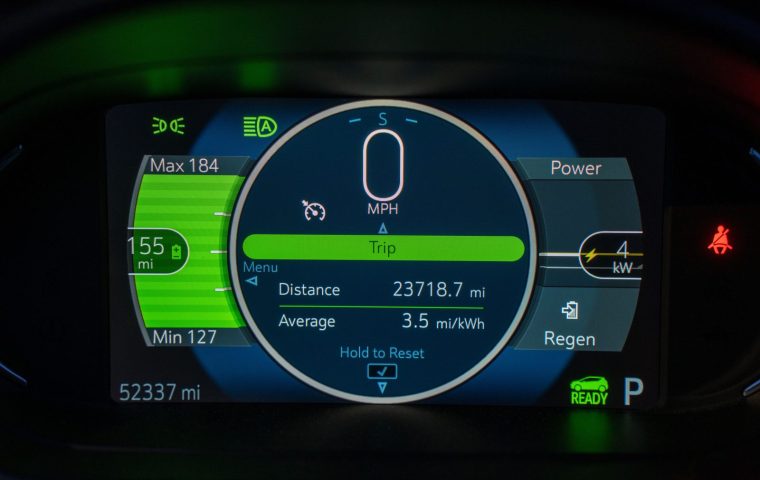


A friend of mine almost bought a four-year-old EV with a dashboard that read 240 miles of range. The number looked healthy, so he nearly signed. Then we plugged in a cheap diagnostic tool in the parking lot and found the pack had lost close to 18 percent of its original capacity. The car was fine. The price was not.
That gap between what the dash shows and what the battery actually holds is where used EV buyers get burned. A gas engine tells you it is tired with a knock or a puff of smoke. A degraded battery just quietly gives you fewer miles, and the seller may not even know it is happening.
The good news is that a used EV can be one of the smartest buys on the market right now. Depreciation is steep and most modern packs age slower than the early scare stories suggested. You just have to read the battery before you read the sticker.
Why the Battery Is the Whole Ballgame
On a used gas car, you worry about the transmission, the timing chain, the rust. On an EV, one component carries most of the value and most of the risk. The battery pack can be 30 to 40 percent of what the car cost new.
Packs lose capacity in two ways. Calendar aging happens just from time and heat, whether you drive or not. Cycle aging happens from charging and discharging. Both are normal, and a healthy pack might shed roughly 1 to 2 percent of capacity a year in average use.
The problem is that the loss is not linear across every car, and abuse accelerates it. If you want the full mechanism, I wrote a plain-English breakdown in ev battery degradation explained, but the short version is this. Heat and constant fast charging are the enemies, and a car that lived a hard life in Phoenix on 100 percent charges every night is a different animal than a garaged commuter from a mild climate.
Check the State of Health, Not the Range Guess
The range number on the dash is an estimate. It reflects recent driving, temperature, and climate use, and it lies to you constantly. What you actually want is State of Health, or SOH, the pack's current usable capacity as a percentage of when it was new.
There are a few ways to get it. Some brands, like Tesla and several newer models, will run a battery health test through the car's own service menu or app. For most others, you plug an OBD2 adapter into the port under the dash and read SOH through an app on your phone.
If a seller refuses to let you read the pack, treat that the way you would treat a used-car seller who will not let you get a mechanic's inspection. It is not proof of a problem. It is a reason to walk unless the price is very forgiving.
What the Numbers Actually Mean
Once you have an SOH figure, you need context for the car's age and mileage. A pack at 92 percent on a five-year-old car is excellent. A pack at 78 percent on a two-year-old car is a warning sign that something ran hot or got fast-charged to death.
Here is a rough guide I use as a starting point. Adjust for climate and how the price reflects the wear.
| State of Health | What It Tells You | How to Treat the Price |
|---|---|---|
| 90 percent or higher | Healthy pack, normal aging | Pay near full asking if the rest checks out |
| 85 to 90 percent | Typical for a 3-6 year old EV | Fair buy, negotiate on other items |
| 80 to 85 percent | Noticeable range loss, still usable | Push for a real discount |
| Below 80 percent | Heavy wear or a hard life | Only worth it at a steep markdown |
Match that against your own needs. If you drive 30 miles a day and charge at home, a pack at 82 percent might be a bargain nobody else wanted. If you road trip constantly, that same car will frustrate you fast.
The Warranty Is Your Safety Net, So Read It
Most EVs sold in the US carry a battery warranty of 8 years or 100,000 miles, whichever comes first. That coverage usually transfers to you as the second owner, which is a real advantage over a used gas car.
But the fine print matters. Many warranties only replace the pack if capacity falls below a threshold, often 70 percent. That means a car sitting at 76 percent is degraded but not covered, and you eat the difference.
Call the manufacturer with the VIN before you buy. Confirm the battery warranty is active, how many years and miles remain, and the exact capacity floor that triggers a replacement. A screenshot from a forum is not proof.
Do a Normal Used-Car Inspection Too
An EV is still a car. It has suspension, brakes, tires, 12-volt electronics, and body panels that all age. EVs are heavy, so tires and suspension components can wear faster than you expect.
Do not let the battery obsession make you skip the basics. Run through a full used car inspection checklist the same as you would on any other purchase, and pay extra attention to tire wear, since uneven wear hints at hard driving or alignment problems.
Set the Car Up to Age Well After You Buy
Say the inspection checks out and you sign. Your job is not done, because how you treat the pack from here decides how much range you keep in year six and seven.
The habits are simple. Charge to 80 percent for daily use, avoid leaving the car at 100 percent or near empty for long stretches, and lean on slower home charging instead of constant fast charging when you can. I go deeper on the daily routine in keep ev battery healthy long term, and following it can meaningfully slow the decline.
Money Talk: Where the Value Hides
Used EVs depreciate hard in the first three years, which is brutal for the first owner and great for you. A car that stickered high when new can land tens of thousands cheaper with a pack that still holds 88 percent.
Factor in the running costs too. Home charging often costs a fraction of gas per mile, and there is no oil, no timing belt, no exhaust to rot out. The battery is the one big-ticket unknown, which is exactly why the SOH reading is worth more than any other single check you make.
How much battery degradation is normal on a used EV?
Roughly 1 to 2 percent capacity loss per year in average use. A pack holding 85 to 90 percent after several years is normal and healthy. Sharp early loss usually points to heat or heavy fast charging.
Can I check battery health without special tools?
Some brands run a health test through the car's app or service menu. For most others you need an inexpensive OBD2 adapter and a compatible phone app. The dash range number alone is not reliable.
Does the battery warranty transfer to me?
Almost always yes. Standard coverage is about 8 years or 100,000 miles and transfers to later owners. Confirm the remaining term and the capacity floor with the manufacturer using the VIN before you buy.
Buying a used EV stops being scary once you stop trusting the range display and start reading the pack itself. Bring a tool, get the State of Health number, confirm the warranty, and inspect the rest of the car like any other. Do that and you will likely drive off with a genuine bargain instead of someone else's worn-out battery.